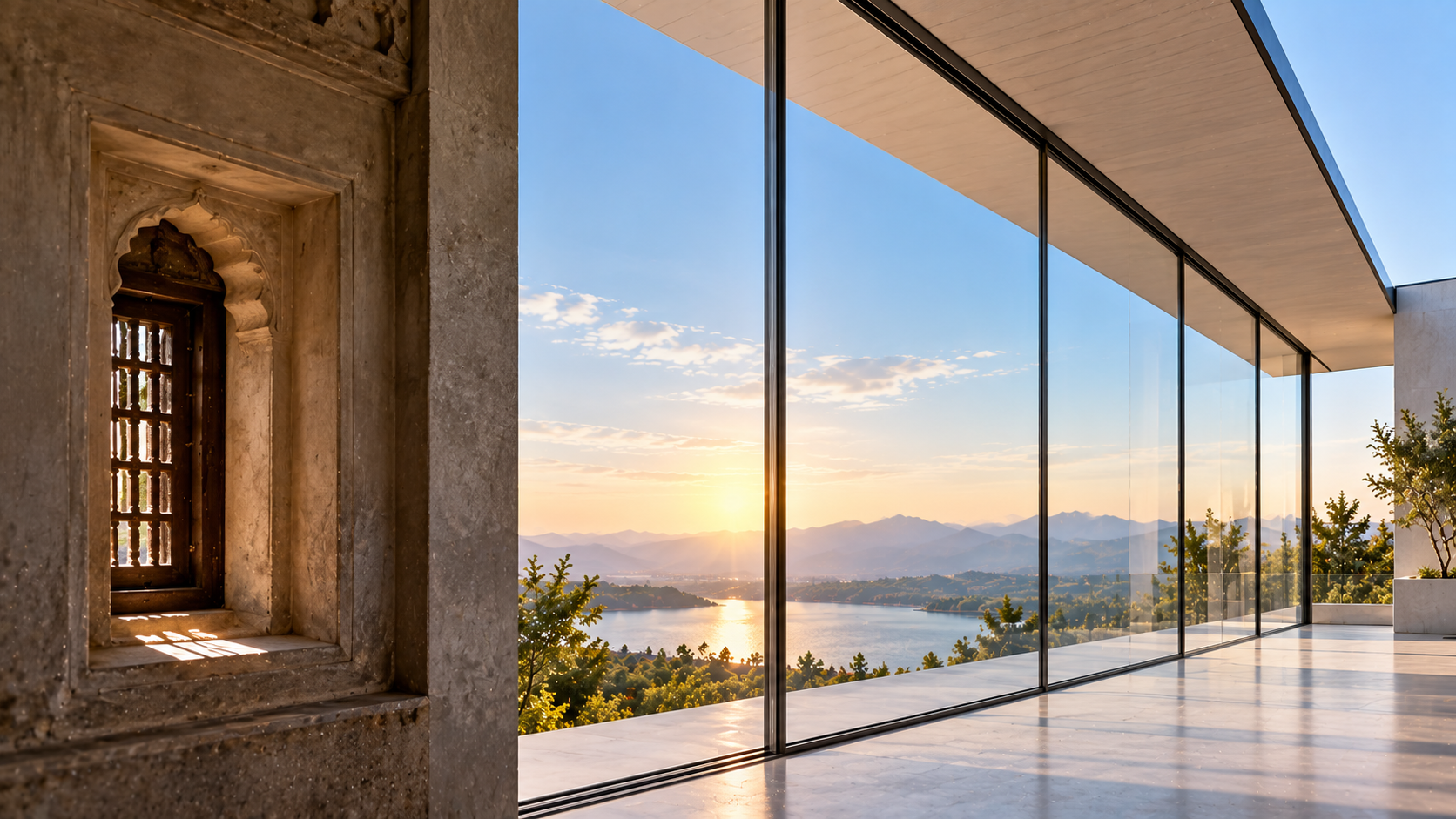
Walk through any old haveli, wada or colonial bungalow and the windows feel undersized. Deep reveals, small openings, dim interiors even at midday.
It is tempting to read this as a stylistic preference. It was not. Every one of those small windows was solving a problem that no longer exists.
Small Windows Were Not a Choice
Five separate constraints pushed openings smaller, and they all applied at once:
- The wall was structural. In load-bearing masonry, every opening removes strength. Large openings needed heavy lintels and arches, and were kept to a minimum.
- Glass was expensive. For centuries, glazing was among the costliest elements of a building, and large panes could not be produced at all.
- There was no climate control. A large opening meant heat in summer and cold in winter, with no mechanical means of correcting either.
- Security mattered. A window big enough to admit light was big enough to admit an intruder.
- Tax, in some places, followed openings. Britain’s window tax, in force from 1696 to 1851, charged householders by the number of windows, and many were bricked up in response.
Small windows were the rational outcome of all five.
What Changed
Every one of those constraints was dismantled by technology, mostly within the last century.
Framed structures moved the load into columns and beams, freeing the wall to become infill rather than support. Float glass made large clear panes cheap. Insulated glazing and thermal breaks allowed a big opening without a thermal penalty. Laminated glass and multi-point locking restored the security that size once cost. Aluminium extrusion made slim frames capable of carrying heavy glass across wide spans.
Nothing about the desire for light changed. Only the ability to satisfy it.
Why Homes Are Going Bigger Now
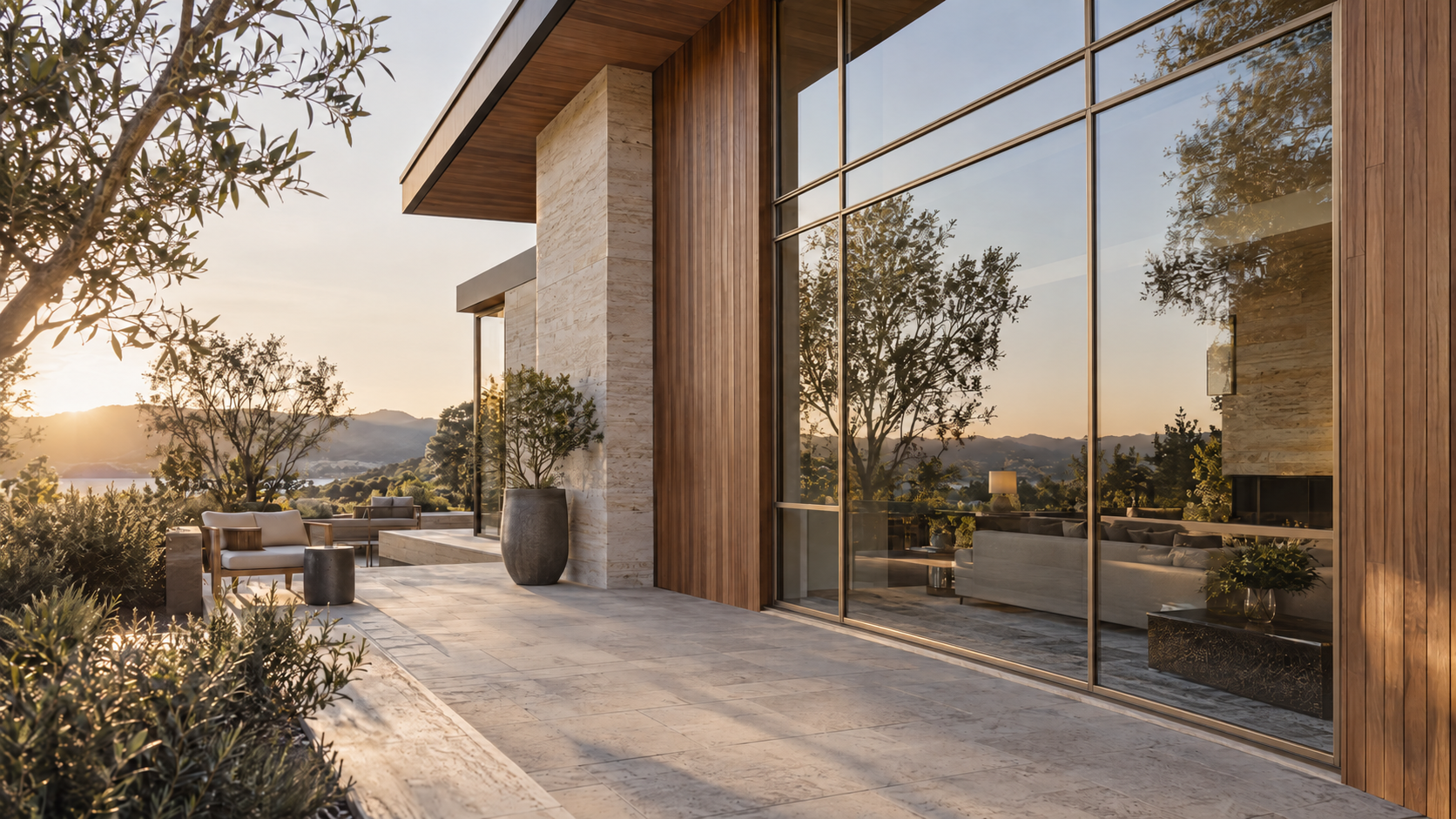
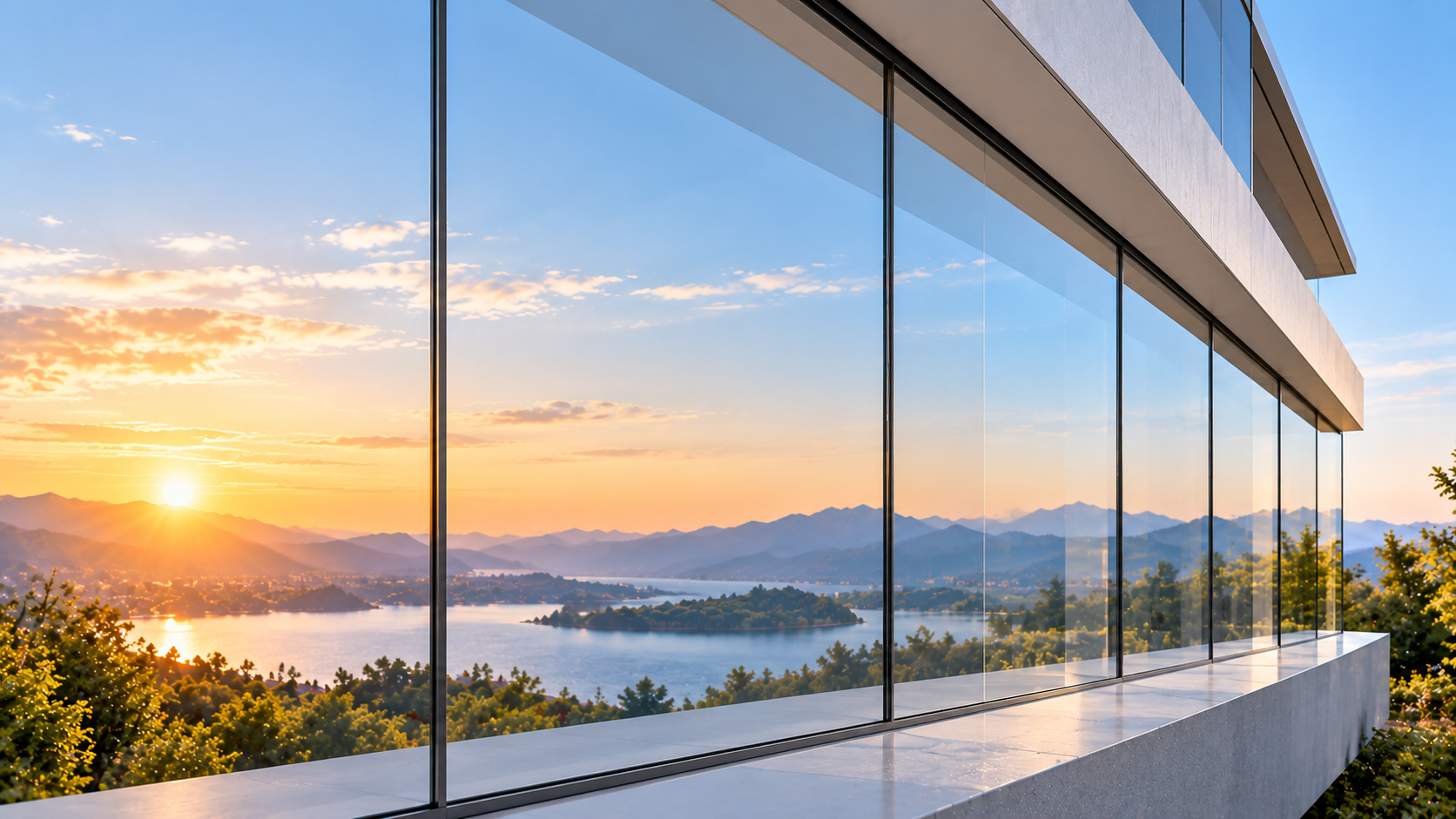
Contemporary Indian homes are using more glass than at any point in history, and the reasons are practical as much as aesthetic.
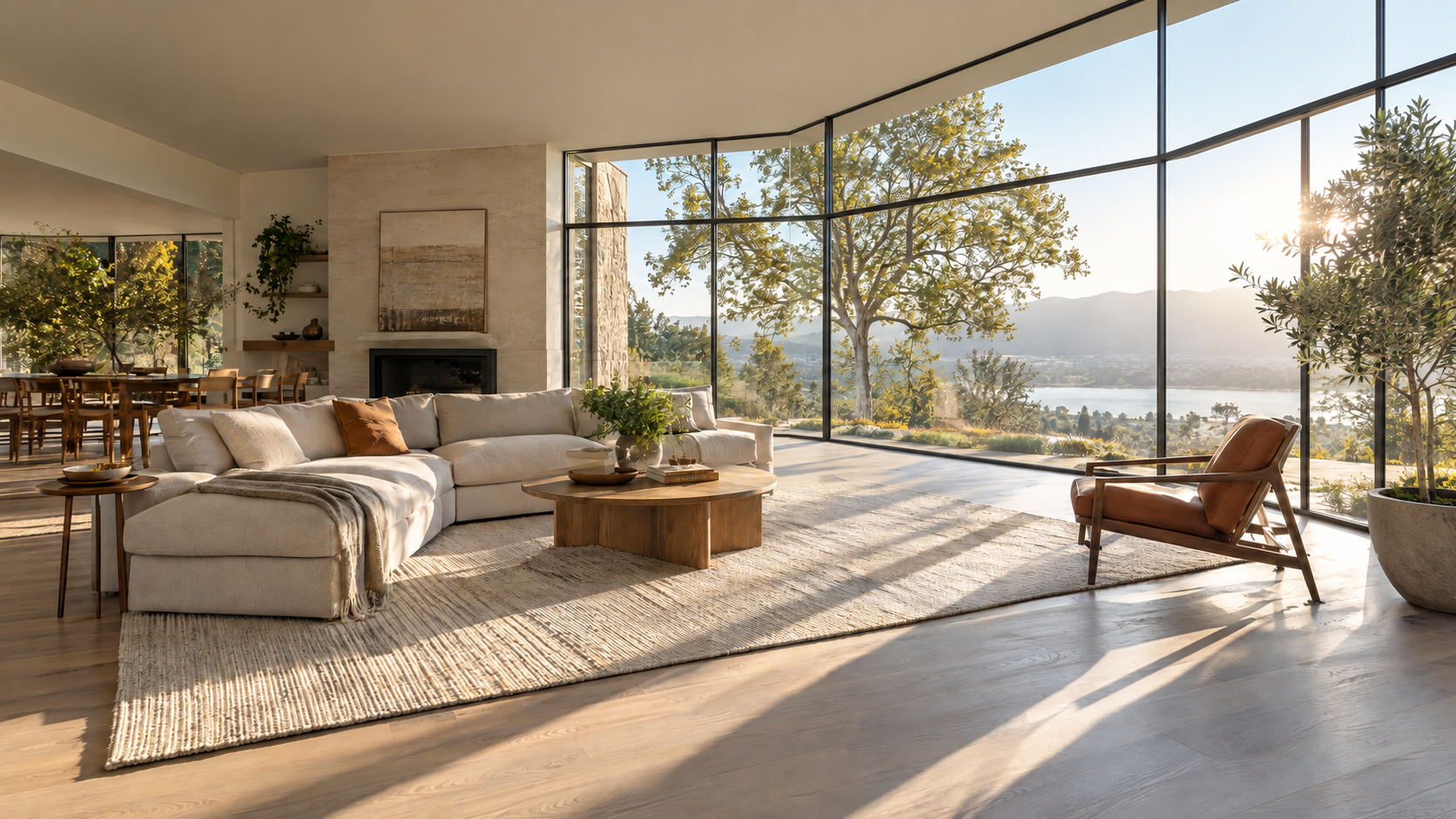
Daylight reduces artificial lighting and measurably affects how a space feels to occupy. Views connect interiors to gardens, balconies and terraces. Open layouts need perimeter light to reach deep into the plan. And large sliding and lift-and-slide systems let a living room open completely onto outdoor space.
The Trade-Off That Still Has to Be Managed
Large glass is only an asset when specified correctly. Left unmanaged, it introduces three problems the old builders were right to worry about:
- Solar heat gain, which needs Low-E or solar control glass on west and south-west elevations.
- Glare, which is a matter of orientation, shading and glass selection rather than size alone.
- Privacy, particularly in dense urban plots where large openings face neighbouring buildings directly.
The difference is that these are now specification decisions with known answers, not structural limits.
Final Thought
Ancient builders made windows small because that was the best available answer to a genuinely hard problem.
Modern homes make them large because the problem has been solved. But it was solved by engineering, not by wishing it away which is why a large window still needs to be specified properly rather than simply made bigger.