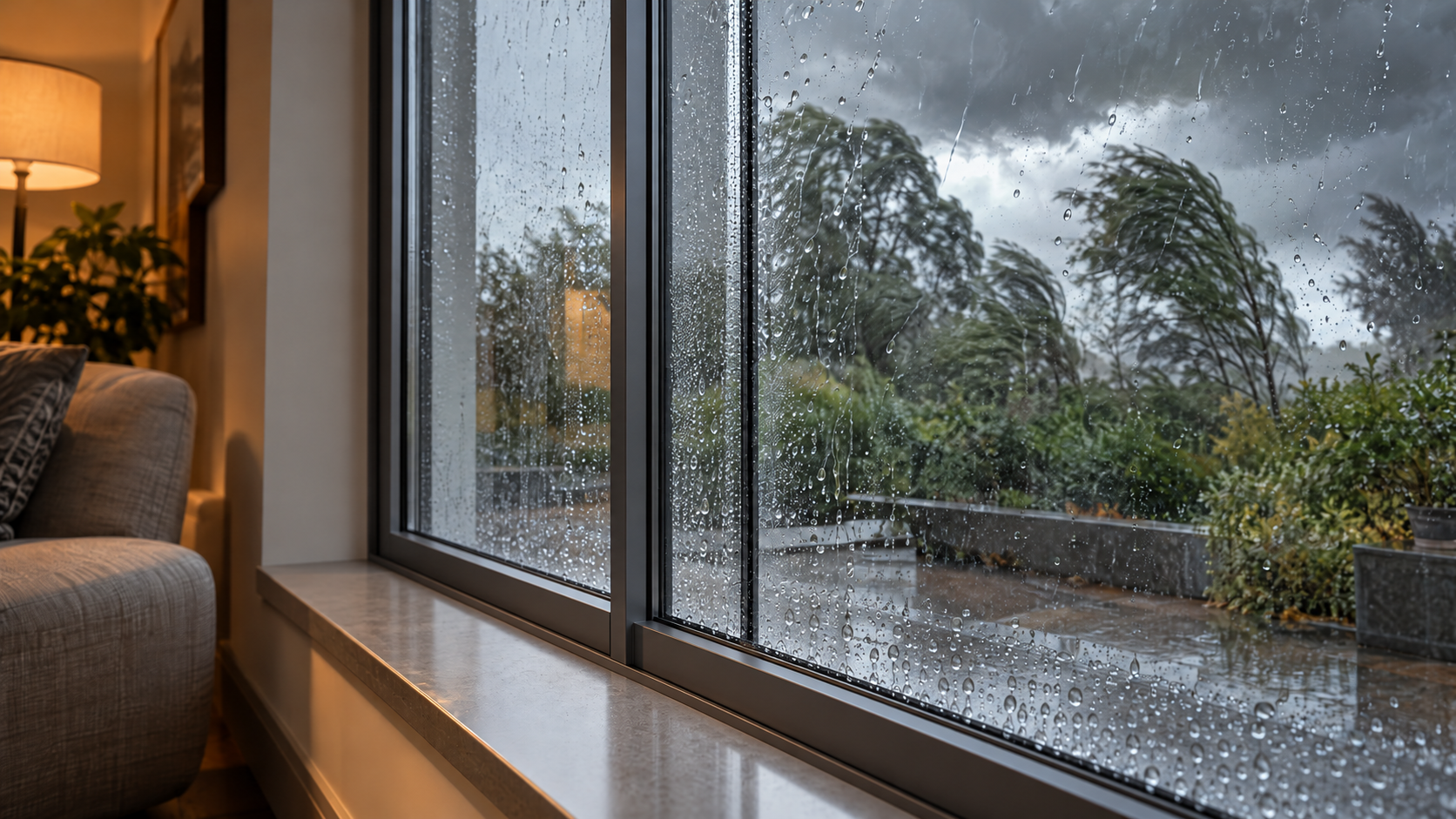
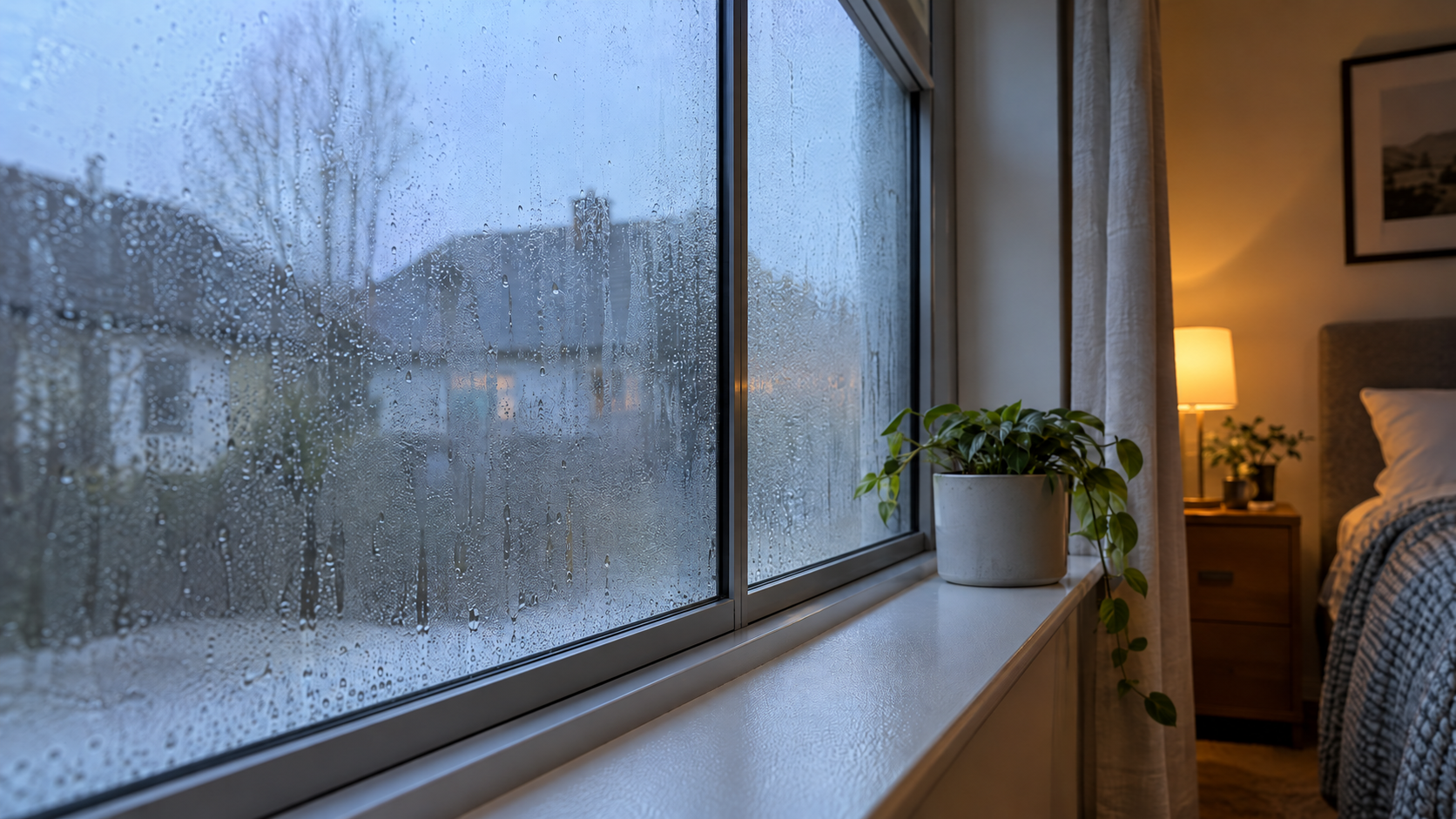
Water droplets on the inside of a window can look like a leak, but the two problems are not the same. Condensation forms when moist air comes into contact with a surface cold enough for water vapour to turn into liquid. It can appear on glass, frame edges and window sills, particularly when indoor humidity is high.
Understanding the cause matters because wiping the glass removes the water but does not change the conditions that created it. When selecting new aluminium windows, Beautex recommends considering glazing, frame performance and ventilation as parts of the same comfort decision.
Why Condensation Forms on Glass
Air contains water vapour. The warmer the air, the more moisture it can generally hold. When humid indoor air touches a colder window surface, the air near that surface cools. If it reaches its dew point, water vapour condenses into droplets.
This is common in kitchens, bathrooms and bedrooms where moisture is produced by cooking, bathing, breathing and drying clothes. Poor ventilation can allow indoor humidity to remain high for long periods.
Glass and Frame Temperature Both Matter
Single glazing can become cold on its interior surface when outdoor conditions are much cooler than the room. Double glazing introduces a sealed cavity between panes, which can keep the inner pane closer to indoor temperature, depending on the glass and unit specification.
Aluminium is a good conductor of heat. In a thermally broken aluminium frame, an insulating component separates the inner and outer parts of the profile and reduces heat transfer through the frame. This can reduce the likelihood of condensation on the frame, although it cannot eliminate condensation under every humidity and temperature condition.
Practical Steps to Reduce Condensation
Use extractor fans in kitchens and bathrooms, ventilate rooms when outdoor conditions allow and avoid drying large amounts of laundry indoors without adequate airflow. Keep curtains slightly clear of the glass so air can circulate across the surface.
Where condensation is persistent, monitor indoor humidity and check whether ventilation is adequate. If droplets appear between the panes of a sealed double-glazed unit, that may indicate a failed seal and should be assessed by a glazing professional.
What to Discuss When Replacing Windows
Ask about the glass build-up, thermal performance of the glazing unit, frame construction and whether a thermal-break option is available for the chosen system. Also review ventilation requirements and the expected indoor humidity of the room.
Beautex aluminium window systems should be specified against the actual project conditions. A window can contribute to reducing cold interior surfaces, but moisture control still depends on how the room is ventilated and used.
Final Thought
Condensation is a building-physics issue, not automatically a sign of a defective window. The most effective response is to identify whether the cause is high indoor humidity, a cold surface, inadequate ventilation or a failed sealed glass unit.
When planning replacement aluminium windows, consider glazing and frame performance together with ventilation. That approach is more useful than repeatedly wiping the glass or applying sealant without identifying the cause.