Condensation is easy to dismiss. A little water on the glass in the morning can be wiped away in seconds and forgotten by lunchtime.
But condensation is not simply a one-time event. It is a daily cycle, and over a monsoon season it can cause significant damage to interiors if it is left unmanaged.
Why It Forms
Warm air can hold more moisture than cool air. When humid indoor air comes into contact with a colder surface, it can no longer retain the same amount of moisture, causing water to form on that surface.
Windows are often among the colder surfaces in a room, making the glass and frame common places for condensation to appear. During the monsoon, indoor humidity can remain elevated for extended periods, allowing this cycle to repeat every day.
Where the Damage Actually Shows
The glass is where condensation is most visible. However, the effects can extend to several other parts of the room:
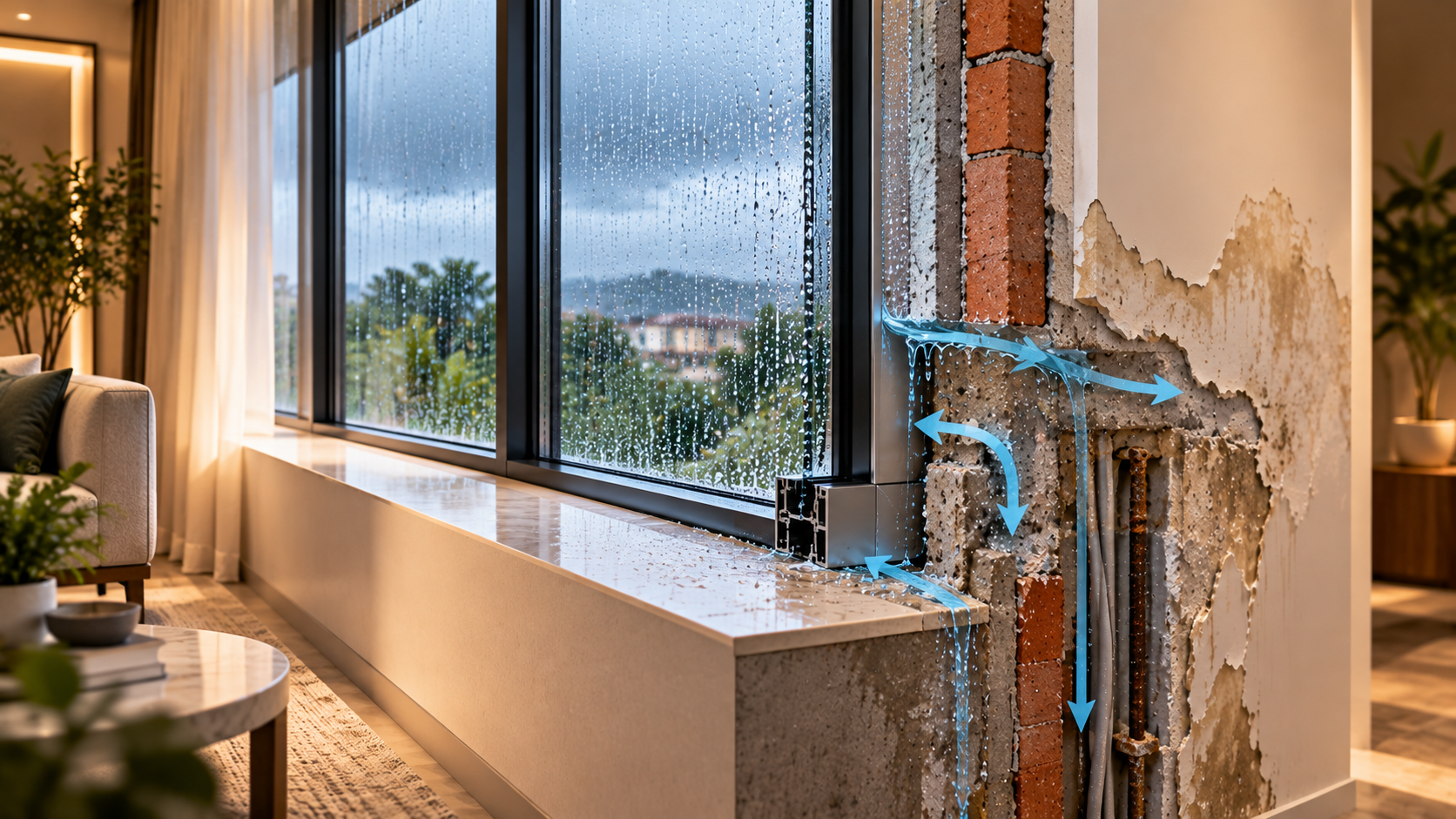
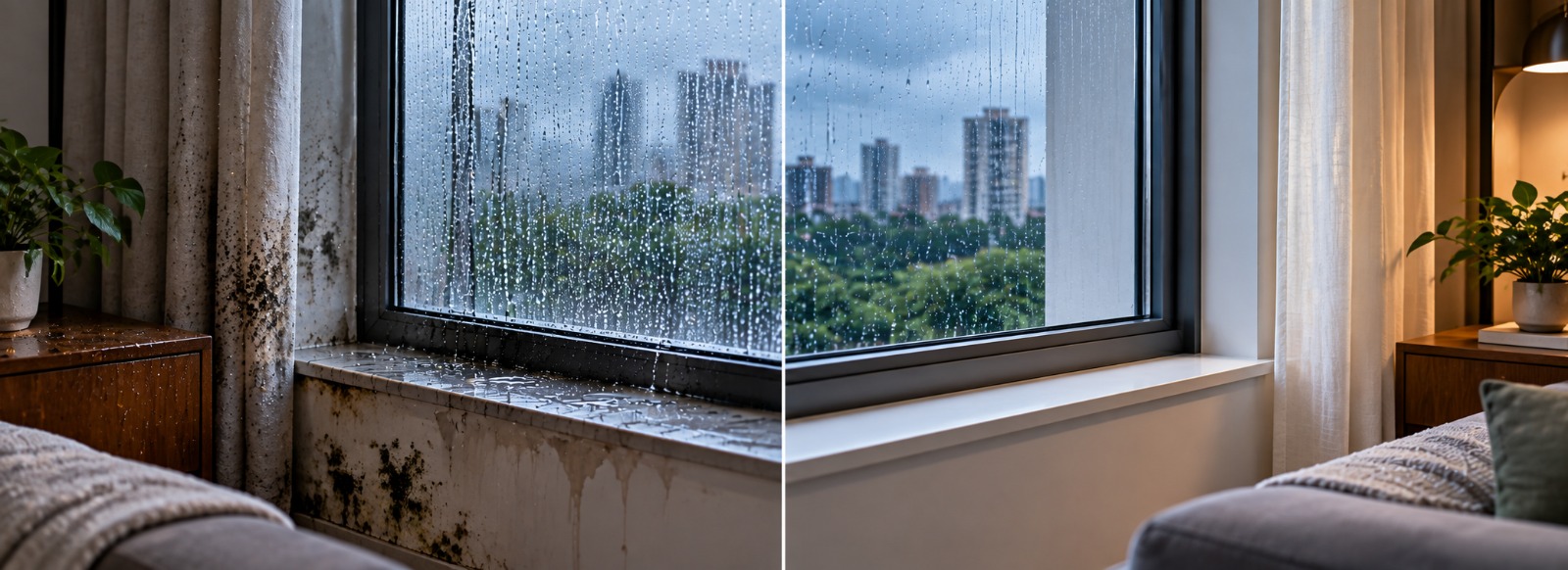
Sills and window ledges, where repeated moisture exposure can damage paint and soften plaster over time.
The wall directly below the window, where water running from the glass can be absorbed and create a persistent damp area.
Curtains and blinds, which can absorb moisture from the glass and hold it against the fabric.
Wooden furniture placed near windows, which can absorb moisture from humid air and potentially swell or change shape over time.
The frame-to-wall junction, where persistent damp conditions can affect sealants and surrounding finishes.
Mould, which can develop when surfaces remain consistently damp and poorly ventilated.
Why It Gets Worse in the Monsoon
Several conditions can occur together during the monsoon and increase the likelihood of condensation.
Outdoor temperatures can fall and cool the glass. At the same time, indoor humidity rises, increasing the amount of moisture present in the air. Windows may also remain closed for longer periods because of rain, reducing natural ventilation.
Together, these conditions can cause rooms to repeatedly develop moisture on colder surfaces throughout the monsoon.
How to Stop It
Condensation can be reduced by controlling both the temperature of the interior window surface and the amount of moisture in the indoor air.
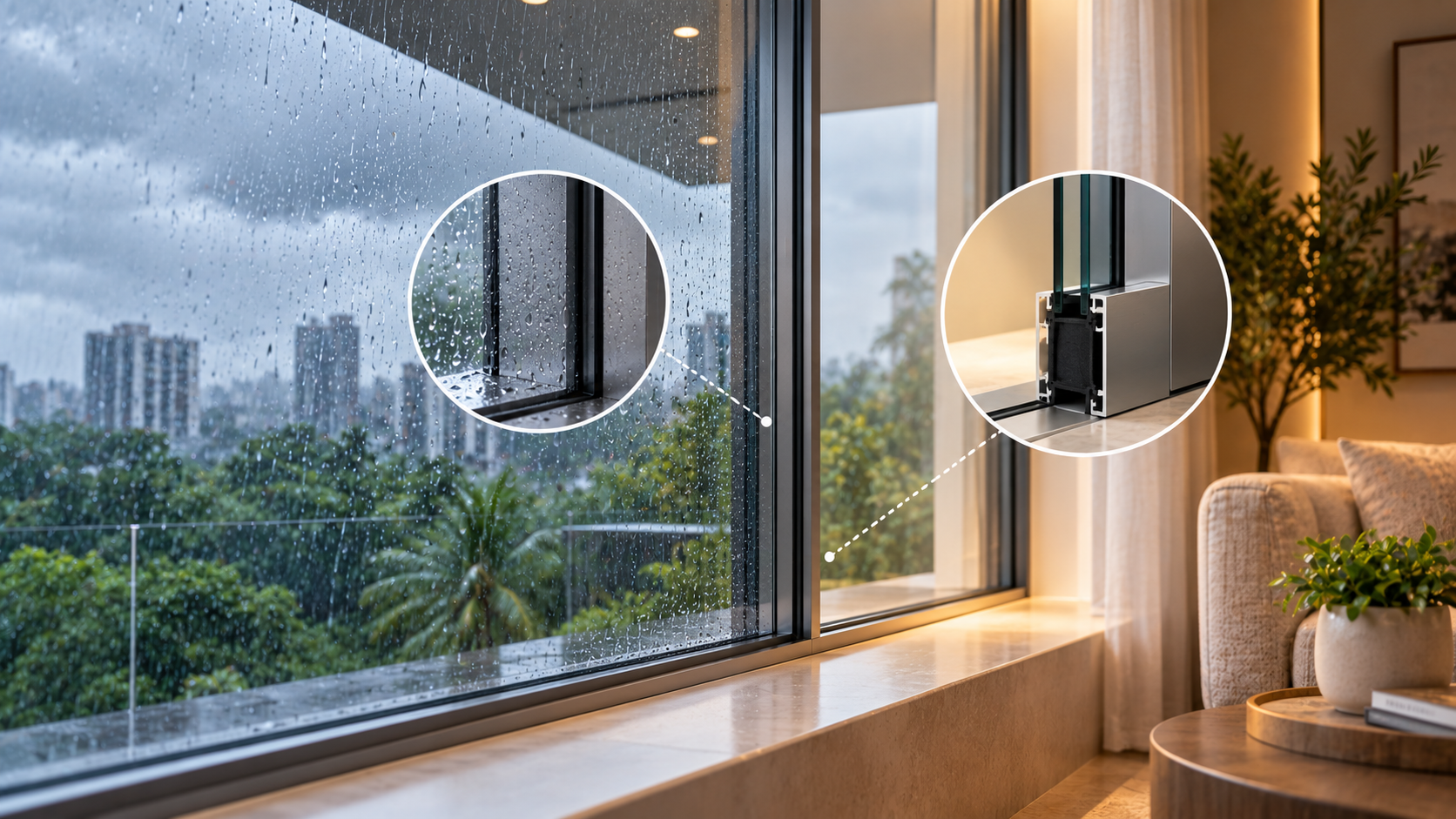
Double glazing keeps the inner pane closer to room temperature than conventional single glazing, reducing the temperature difference that contributes to condensation.
Warm-edge spacers help prevent the perimeter of the insulated glass unit from becoming a particularly cold area where condensation can begin.
Thermally broken frames reduce heat transfer through the aluminium profile, helping keep the interior frame surface warmer.
Controlled ventilation allows humid indoor air to escape, even when windows cannot remain fully open during rainy weather.
Tilt-and-turn configurations can provide controlled ventilation while limiting the amount of exposure to rain.
Keeping curtains clear of the glass allows air to circulate across the surface instead of trapping humid air against the window.
The first three are decisions that can be made when specifying the window system. The remaining measures are everyday practices that can also help manage indoor moisture.
Simply wiping the glass every morning does not address the underlying cause. It removes the visible moisture without changing the conditions that caused it to form.
Final Thought
Condensation is not necessarily a defect in your home. It is a natural physical process that occurs when humid air meets a sufficiently cold surface.
What you can control is how cold the interior surface of your window becomes and how much moisture remains indoors. A well-specified window system, combined with appropriate ventilation and everyday moisture management, can help keep the inner face of the window warmer and your interiors drier throughout the monsoon.