The window is one of the oldest problems in architecture and one of the last to be properly solved. For most of human history, a window was a compromise nobody was happy with.
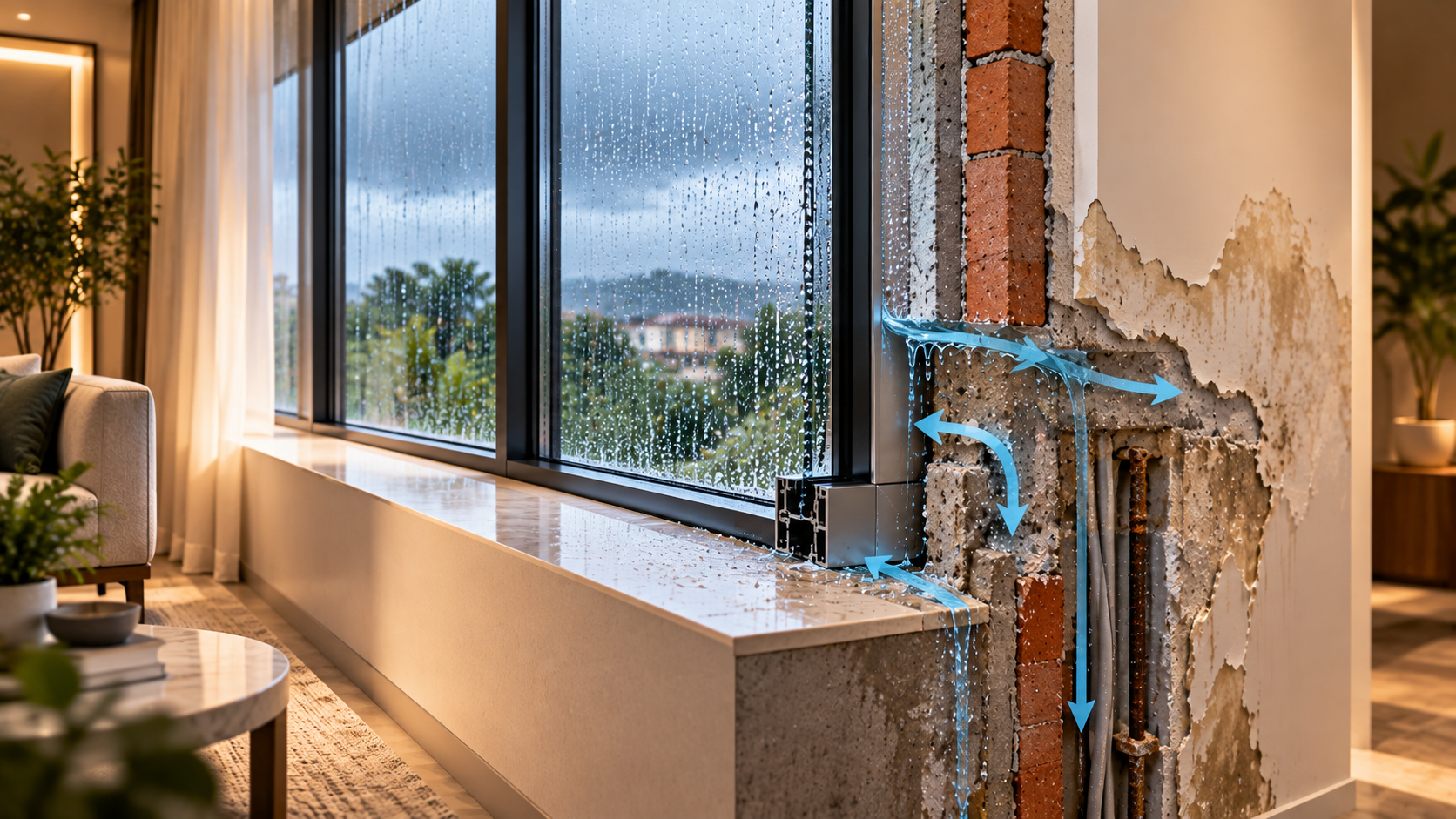
You could have light, or you could have shelter. Getting both took five thousand years.
The First Windows Were Just Holes
The earliest windows were exactly that openings cut into a wall to let smoke out and daylight in.
They were small by necessity. A larger opening weakened a load-bearing wall, admitted rain and wind, and offered anyone outside an easy way in. Early builders kept them narrow and placed them high, and accepted that interiors would be dark.
Covering the Opening Without Closing It
Long before glass, builders tried almost everything to cover an opening while still letting light through:
- Timber shutters, which worked perfectly against weather but eliminated light entirely when closed.
- Stone and timber lattices, used across West Asia and India, which broke wind and gave privacy while admitting filtered light.
- Oiled cloth and animal hide, translucent enough to glow but not to see through.
- Paper screens, developed across East Asia, which diffused light beautifully and stopped almost nothing else.
Each solved part of the problem. None solved all of it.
Glass Arrives, Slowly
The Romans were the first to set glass into window openings, in cast panes roughly two thousand years ago. Surviving examples from Pompeii and Herculaneum are thick, green and barely transparent, but they were doing something no other material could sealing the opening while passing light.
Roman glass technology largely disappeared from Europe for centuries afterward. When window glass returned in the medieval period it was expensive enough to be reserved for churches and the wealthy, made in small panes joined by lead because larger sheets could not be produced.
The English word itself remembers the older arrangement. Window comes from the Old Norse vindauga literally wind eye.
Industry Changes Everything
Sheet glass manufacturing in the nineteenth century brought windows within reach of ordinary homes for the first time, and the modern facade began to appear.
The decisive change came in 1959, when the float glass process made large, flat, optically clear panes cheap and repeatable. Almost every pane of glass in your home today exists because of it.
Where That Leaves Us
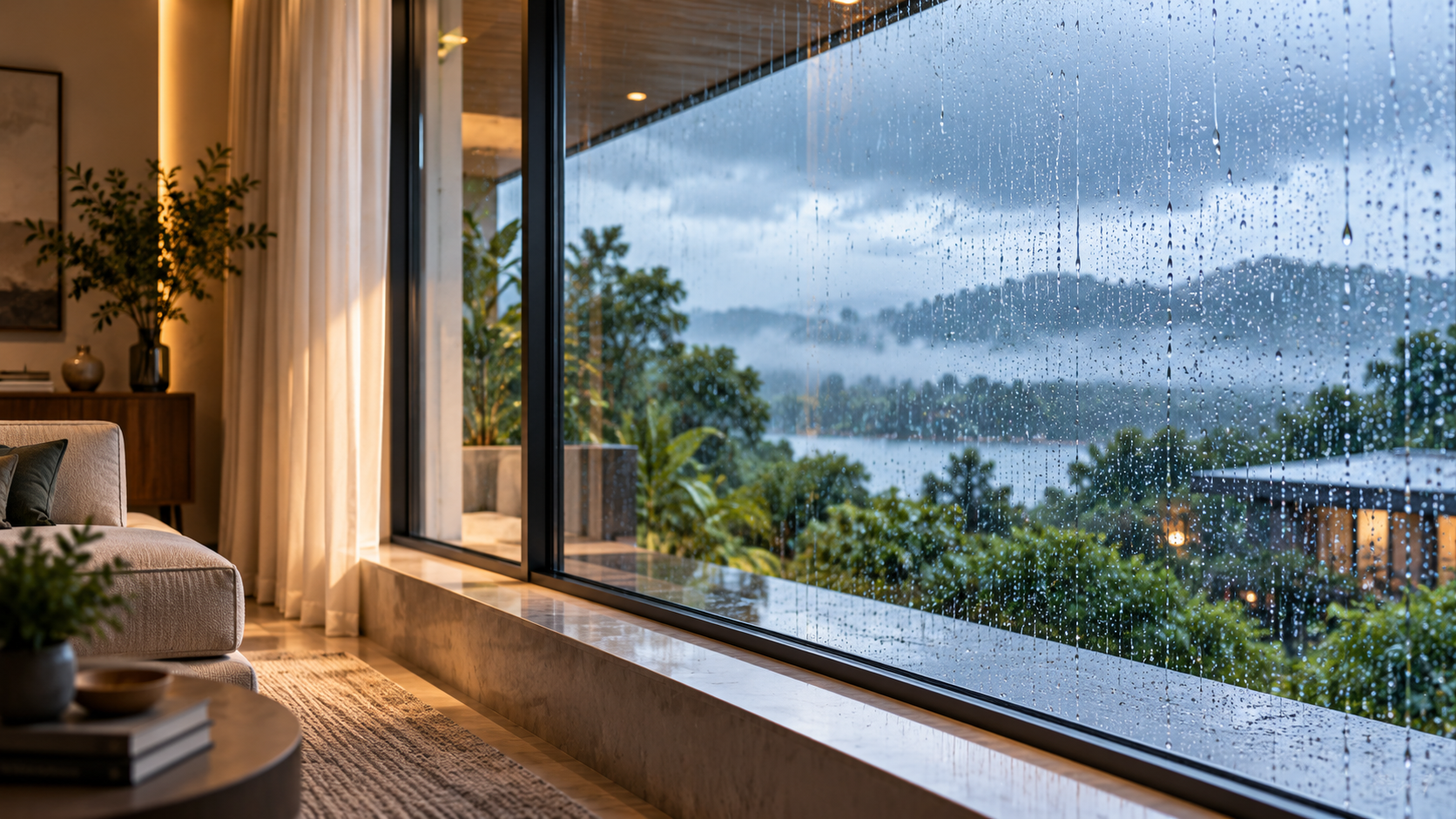
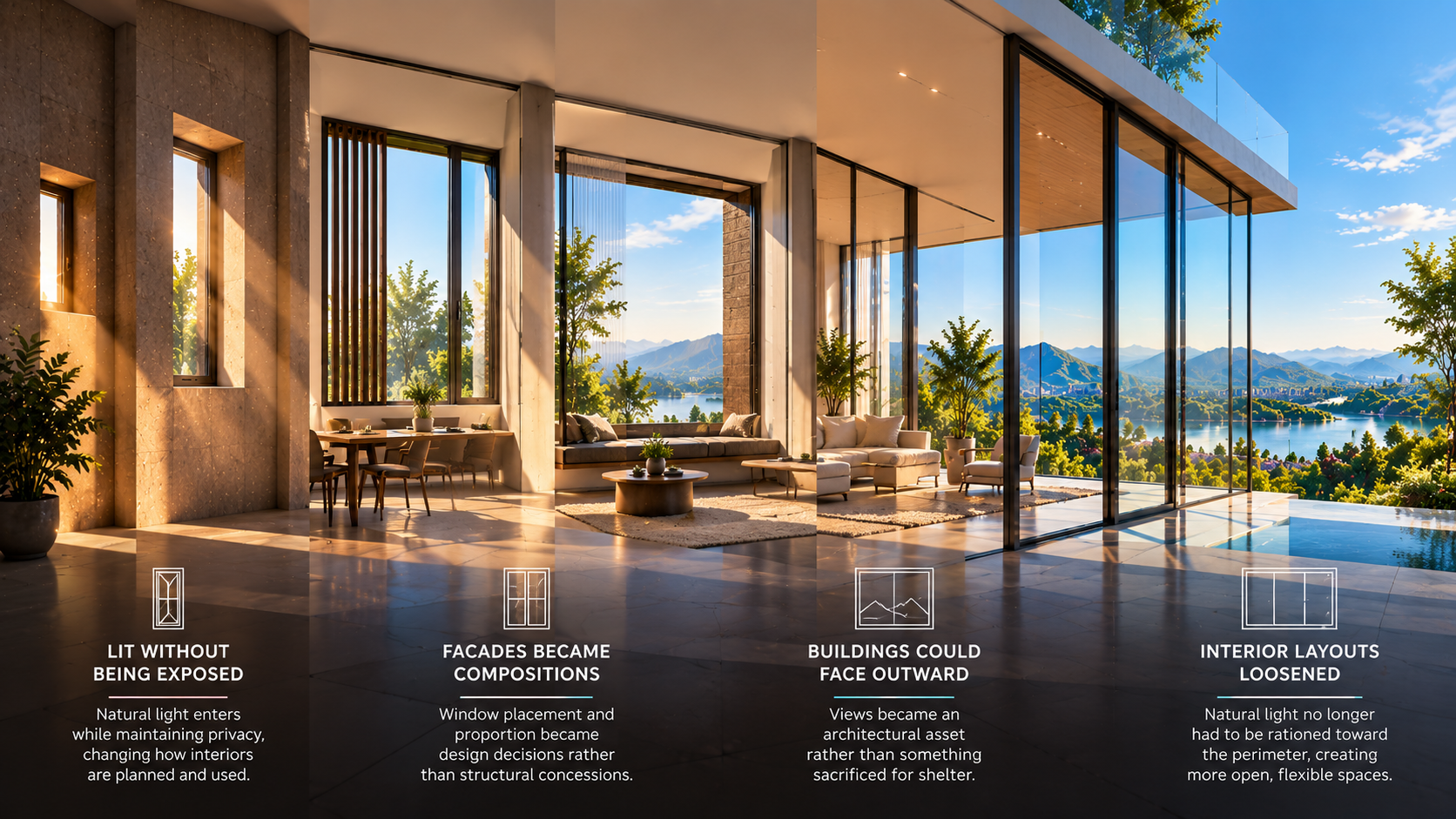
The compromise is finally gone. Modern window systems deliver daylight, uninterrupted views, weather resistance, thermal control, acoustic insulation and security at the same time.
Slim aluminium profiles carry glass spans that would have been structurally impossible a century ago. Insulated units manage heat without reducing light. What early builders treated as mutually exclusive is now simply expected.
Final Thought
It is worth remembering, standing in front of a large modern window, that this view is a recent achievement.
For most of history, a room like yours would have been dark, or it would have been wet. The fact that it is neither represents five thousand years of solving one stubborn problem.