Before window glass, every building faced the same choice. Open the wall and accept the weather, or close it and accept the dark.
Window glass removed that choice, and in doing so it changed what a building could be. That shift still governs how your home is designed today, whether or not anyone points it out.
The Wall Was Once the Only Option
In load-bearing construction, every opening is a weakness. Walls carried the building, so openings stayed small, and interiors stayed dim.
This was not an aesthetic preference. It was structural arithmetic, and it produced the thick walls and narrow openings found in traditional buildings almost everywhere.
What Window Glass Made Possible
Once glass could seal an opening while passing light, the calculation changed. Openings could grow, and architecture responded almost immediately:
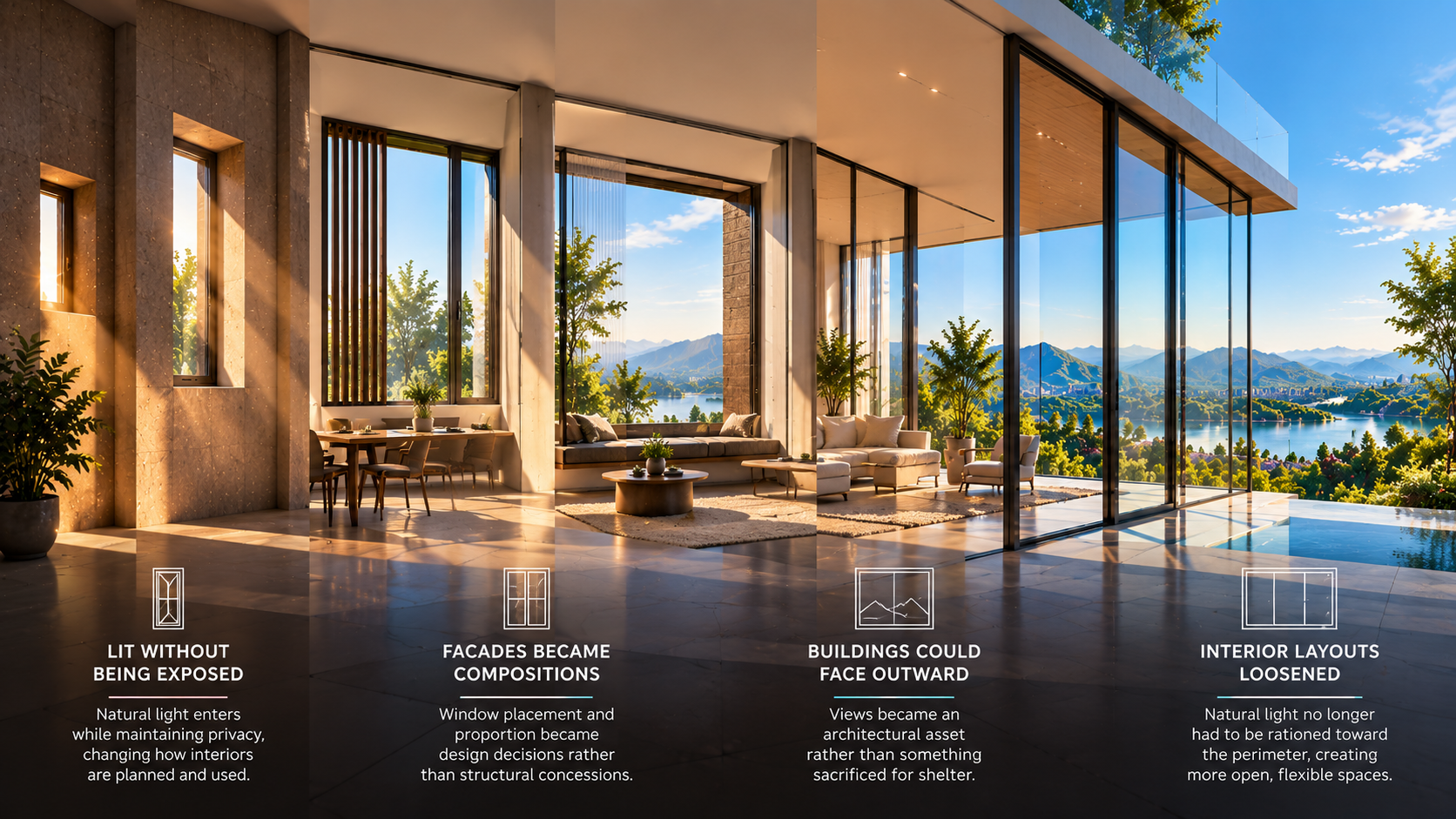
- Rooms could be lit without being exposed, which changed how interiors were planned and used.
- Facades became compositions, with window placement and proportion becoming design decisions rather than structural concessions.
- Buildings could face outward, turning views into an architectural asset rather than something sacrificed for shelter.
- Interior layouts loosened, because natural light no longer had to be rationed toward the perimeter.
From Opening to Building Element
The larger shift came when window glass stopped being something set into architecture and became architecture itself.
Curtain walling made glass the outer skin of the building rather than an infill within it. Toughened and laminated glass turned it into a material with defined structural behaviour. Float glass made large clear panes ordinary rather than exceptional.
Once glass could span, buildings stopped being walls with openings and became frames with glass.
That inversion is the single largest change in the history of building facades, and it happened within roughly a hundred years.
Why This Still Matters in Your Home
Every large opening in a contemporary Indian home depends on that history, and on the glass specification chosen for it:
- Double-glazed units control heat transfer, which is what makes large west-facing glass liveable rather than punishing.
- Low-E coatings admit daylight while rejecting a substantial share of solar heat.
- Laminated glass holds together when broken, which is what allows glass at height and at scale.
- Acoustic laminated units turn a large window into a sound barrier rather than a weak point.
The frame gets the attention. The glass does most of the work.
Orientation decides which of these matters. A north-facing window and a west-facing one in the same house have genuinely different requirements, and specifying both identically wastes money on one and underperforms on the other.
Final Thought
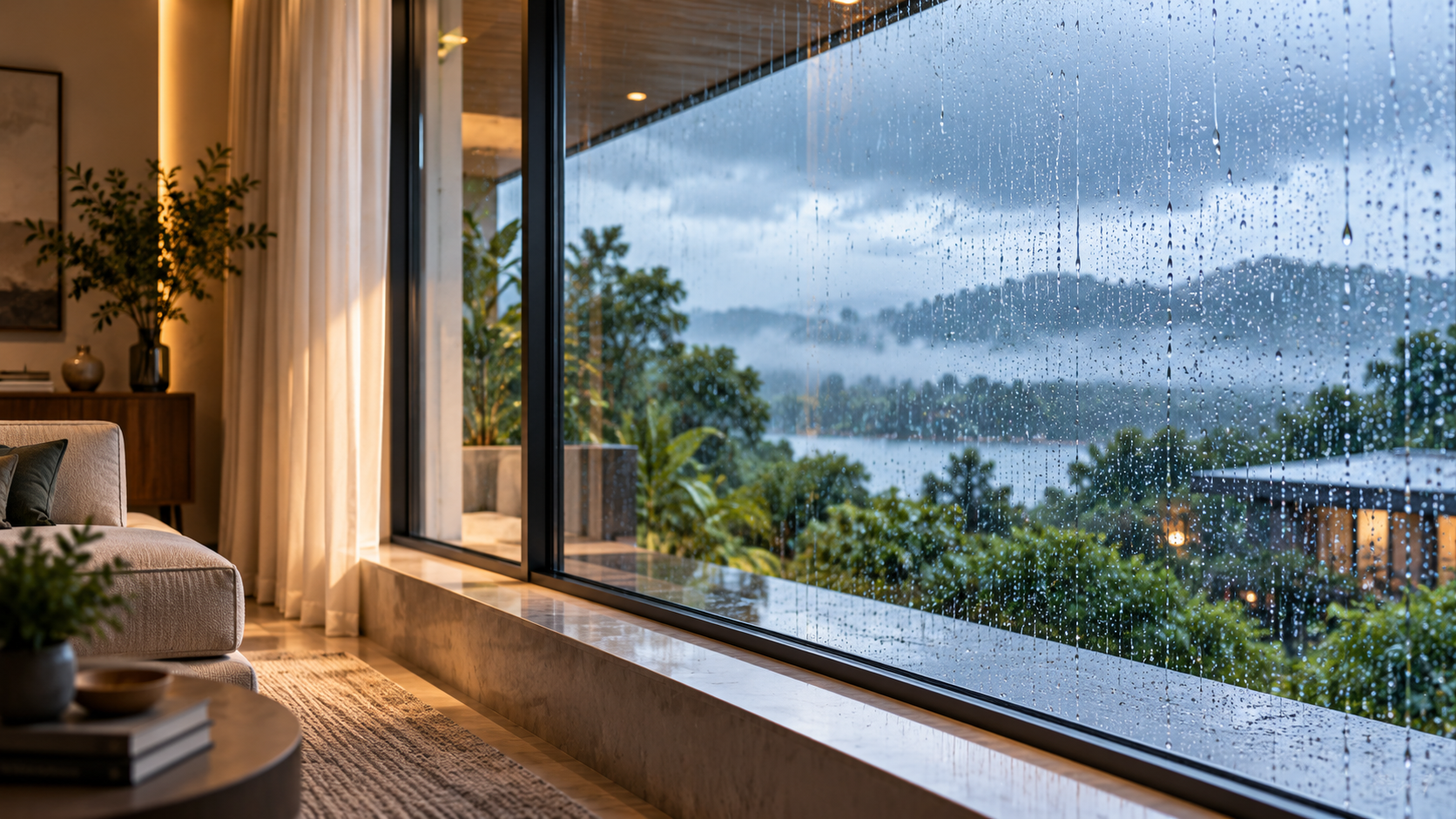
Window glass is the reason your home can have a wall that is mostly view.
That is worth registering as an achievement rather than a default. And it is worth specifying properly, because the difference between glass that merely fills an opening and glass engineered for its orientation is the difference between a room you enjoy and one you keep the curtains closed in.