Thermal breaks are usually discussed in the context of summer heat and air-conditioning bills. That is a fair way to explain them, but it is incomplete.
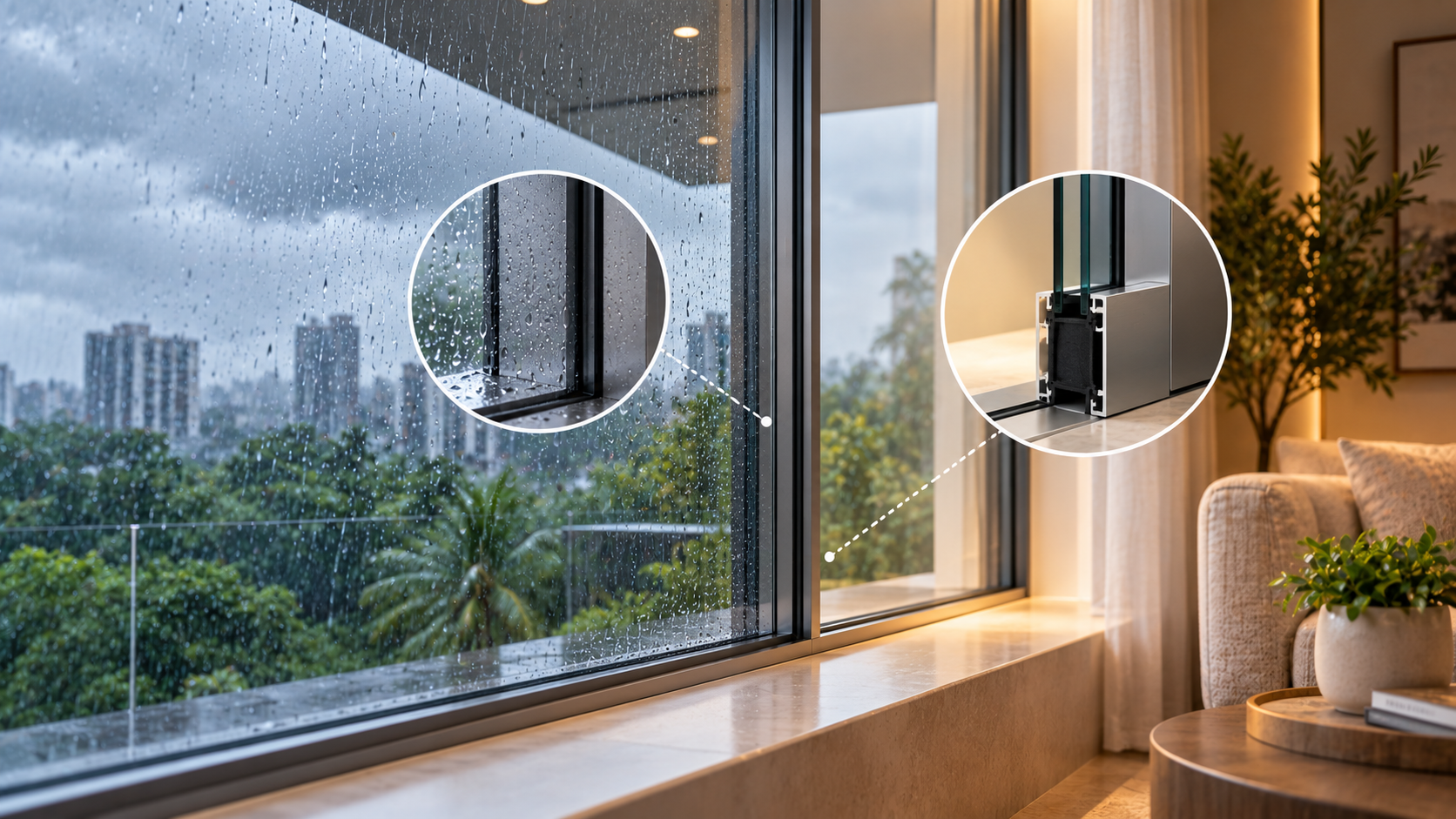
The same feature that helps keep heat out in summer can also provide an important benefit during the monsoon. It helps prevent aluminium window frames from becoming excessively cold and developing condensation on the inside.
What a Thermal Break Actually Is
Aluminium is a metal, and metals conduct heat efficiently. Without a thermal break, an aluminium frame can transfer outdoor temperatures directly from the exterior face to the interior face.
A thermal break interrupts this direct path. A non-conductive strip, commonly made from polyamide, is incorporated into the profile so the inner and outer sections of the frame are separated. This reduces the transfer of heat and cold through the frame.
The Monsoon Problem Nobody Mentions
During the monsoon, indoor air can contain significant amounts of moisture. When humid air comes into contact with a surface that is cooler than the surrounding air, condensation can occur and moisture can form on that surface.
An aluminium frame without a thermal break can become relatively cold when rain and cooler outdoor conditions lower the temperature of its exterior surface. That temperature can be transferred towards the interior face of the frame, creating conditions where indoor moisture may condense.
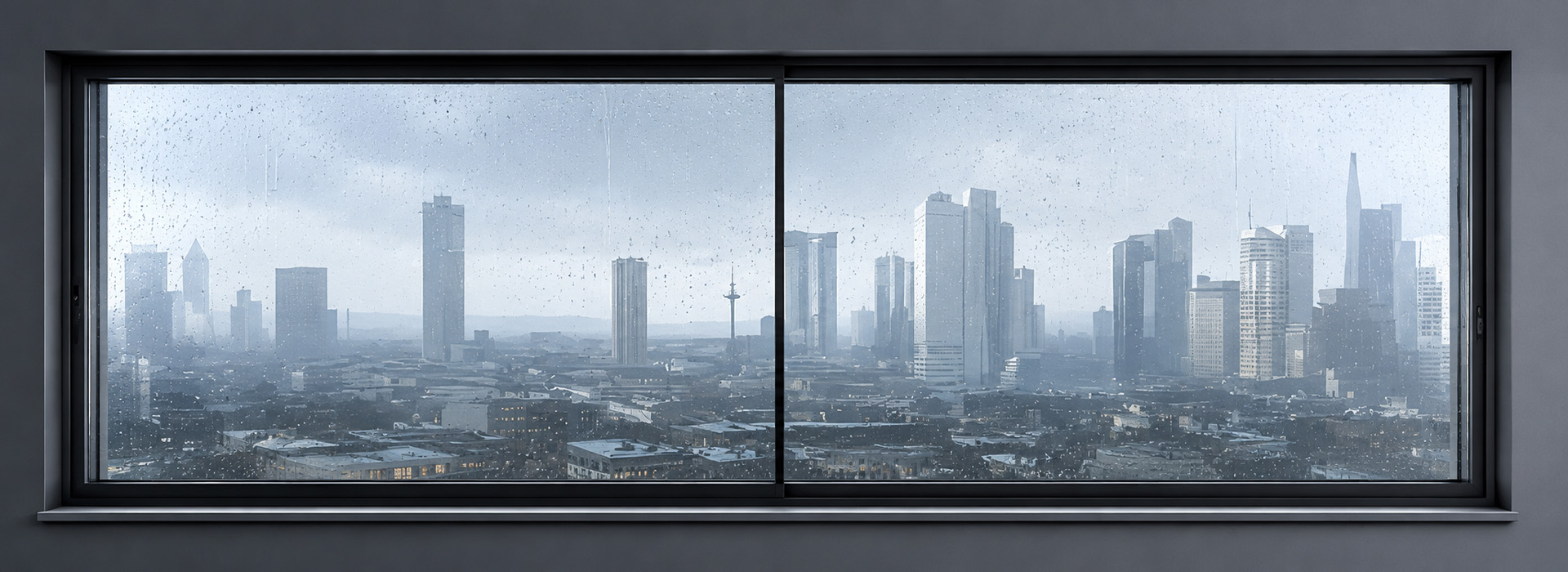
This is why some homes experience water droplets forming along the inner edge of the frame during heavy rain even when there is no actual water leakage. The moisture is forming indoors rather than entering from outside.
Why That Water Matters
Condensation on window frames may appear harmless, but repeated moisture exposure can create several practical problems:
It collects on the sill, where moisture can remain in contact with paint, plaster, and other surfaces for extended periods.
It creates a persistently damp edge, which can contribute to mould and mildew growth when moisture remains trapped over time.
It can stain curtains and blinds positioned close to the frame and sill.
It can be mistaken for a leak, leading homeowners to reseal a window when the actual issue is condensation rather than water entering from outside.
It can affect hardware over time, particularly when moisture repeatedly collects around rollers, hinges, and locking components.
When this cycle repeats throughout the monsoon, small amounts of moisture can gradually create larger maintenance concerns.
How a Thermal Break Changes It
Because a thermally broken frame reduces direct heat transfer between the exterior and interior sections, the inner face of the frame can remain closer to the indoor temperature.
This can reduce the likelihood of condensation forming on the interior surface when indoor humidity is high.
The inside surface stays warmer, reducing the likelihood that humid indoor air will reach its condensation point against the frame.
Sills can stay drier, helping reduce the persistent moisture conditions that can encourage mould growth.
The frame is less likely to become the coldest surface in the room, reducing its tendency to become a collection point for condensation.
Pairing a thermal break with double glazing can extend similar thermal benefits to the glass, which is another surface where condensation can occur during humid weather.
Final Thought
A thermal break is not simply a summer feature. It is a year-round design element that can provide important benefits during humid monsoon conditions as well.
If your aluminium windows regularly develop condensation during heavy rain, it is worth understanding whether the issue is water leakage or surface condensation. A well-designed thermally broken aluminium window system can help control the temperature of the interior frame surface and reduce the conditions that lead to condensation.