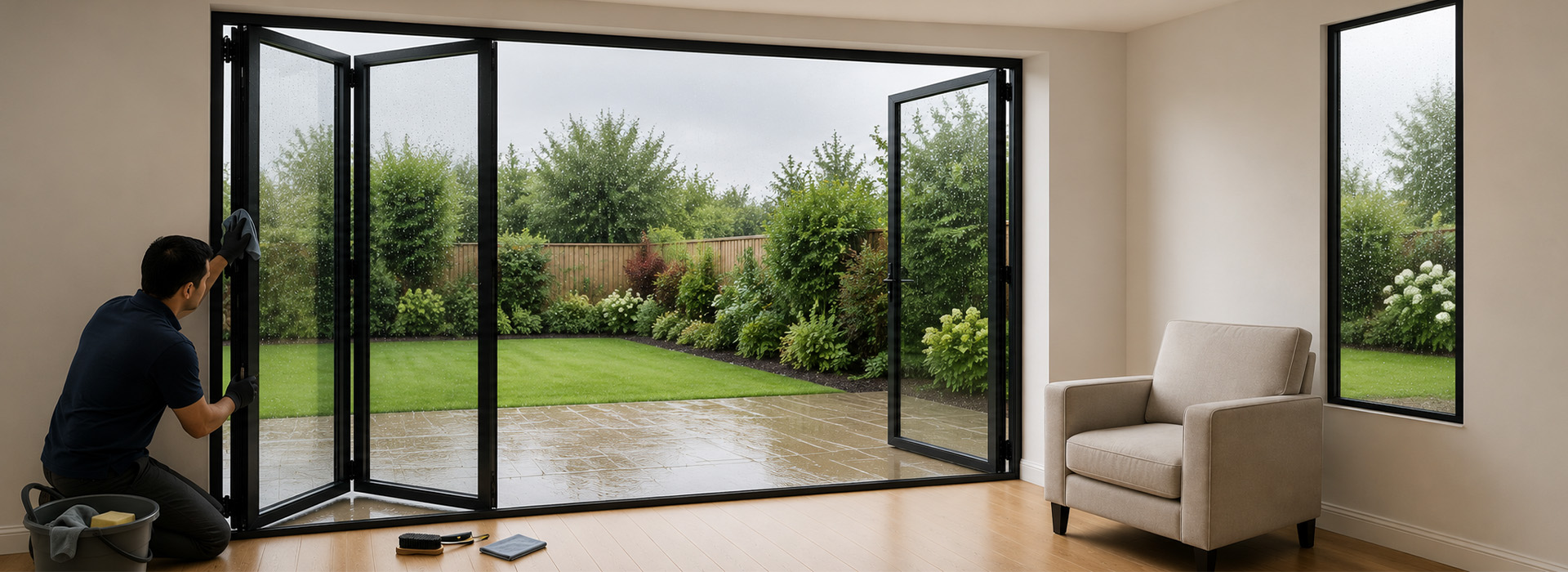
Most people think of rain as one thing. It falls, it lands, and it drains away. But the rain that damages windows behaves very differently from the rain that simply runs harmlessly down a wall.
The difference is wind. Once wind enters the equation, water stops behaving in the way most basic window systems are designed around. This is why one window can leak during a storm while another in the same building stays completely dry.
How Normal Rain Behaves
Rain falling in still air moves almost straight down, and gravity does most of the work.
The sill sheds water outward, the drip groove breaks the flow before it reaches the frame, and any water entering the outer track drains through the weep holes. A window only needs to be reasonably well designed to cope with these conditions.
How Wind-Driven Rain Behaves
Add wind and the physics change completely. Rain no longer falls onto the window; it is driven towards it at an angle and under pressure.
Three things happen at once:
Water arrives at an angle. Sills and drip grooves are designed to shed downward water, but they provide far less resistance to rain striking the glass sideways.
Air pressure builds outside. Wind pressing against a building creates higher pressure outside than inside, and this pressure difference can push water through any available gap.
Water can move upward. Under sufficient pressure, water can move into parts of the frame against gravity, entering drainage channels from directions that ordinary rainfall would not normally reach.
A window that performs well during ordinary rainfall can therefore experience leakage within minutes when exposed to strong wind-driven rain.
Which Homes Are Most Exposed
Exposure can vary significantly, even between different elevations of the same building. The greatest demands are typically placed on:
Upper floors of apartment buildings, where wind speeds are generally higher and less obstructed by surrounding structures.
Coastal properties, where sustained onshore winds can drive rain directly against windows during the monsoon.
Elevations without a chajja or overhang, where there is little to slow or redirect rainfall before it reaches the window.
Windows facing prevailing monsoon winds, where the direction of exposure increases the pressure and volume of rain reaching the opening.
If one window leaks while others in the same building remain dry, differences in exposure are often an important factor to investigate.
What Actually Resists Wind-Driven Rain
Resisting wind-driven rain is a design outcome, not simply the result of having good sealing. High-performance aluminium windows manage these conditions through several layers working together:
Multi-layer gaskets maintain compression around the shutter and help prevent water from passing through the closed window even when the system is exposed to wind pressure.
Pressure-equalised drainage chambers help balance air pressure within the frame, reducing the pressure difference that can otherwise drive water through small openings.
Baffled weep holes allow accumulated water to escape while reducing the ability of wind to force water back through the drainage path.
A correctly sealed frame-to-wall junction prevents water from bypassing the window system entirely through gaps between the aluminium frame and the surrounding structure.
Pressure equalisation is one of the key principles that separates an engineered window system from a basic one. Instead of simply fighting against the water, the system reduces the pressure that drives water inward in the first place.
Final Thought
Ordinary rain asks a window to shed water. Wind-driven rain asks it to resist water that is actively being pushed inward under pressure. These are fundamentally different demands.
Before buying aluminium windows, ask for the system’s water-tightness rating and the pressure at which it was tested. A supplier who can clearly explain the tested performance is demonstrating an engineered system, not simply making general claims about product quality.