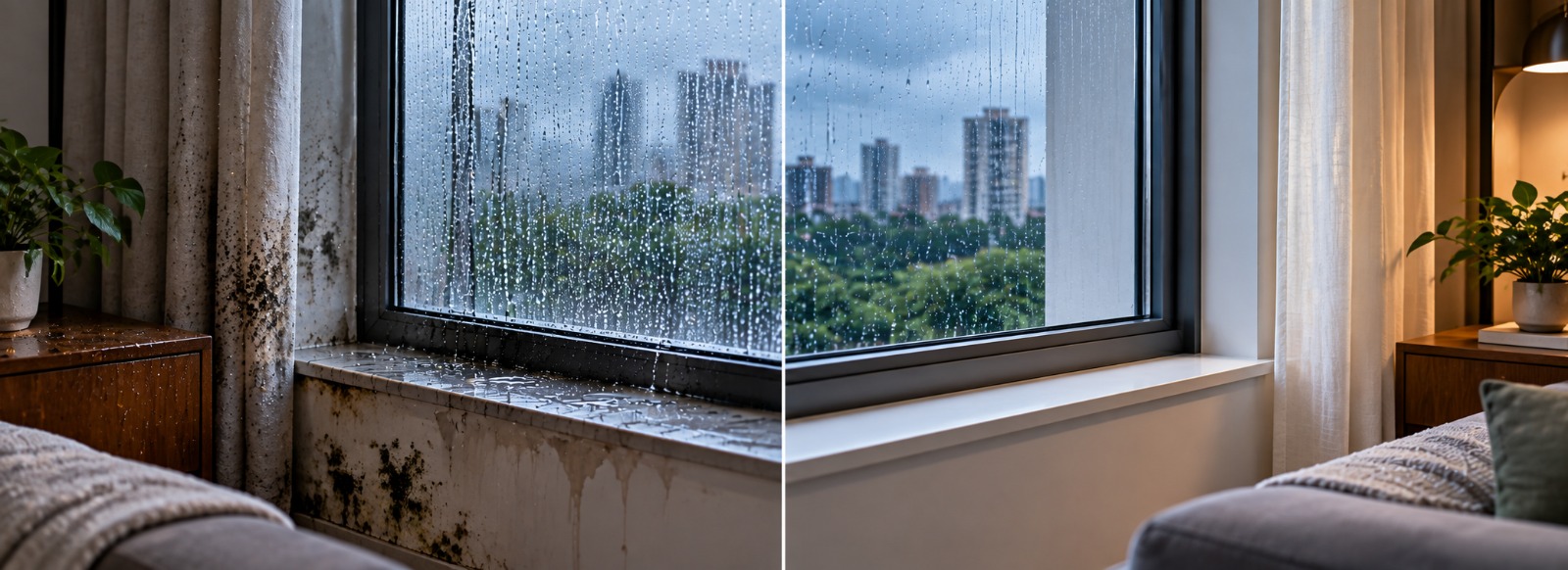
Most homeowners experience a window project from two endpoints: selecting the product at the beginning and seeing the finished installation at the end. What happens between these stages often remains invisible, making the process feel uncertain and leaving little understanding of what actually determines the final quality.
A professionally executed aluminium window and door project follows a structured process where every stage contributes to long-term performance, durability, and aesthetics.
Here’s what a complete project looks like from start to finish.
Stage One: Site Survey and Measurement
Every successful aluminium window project begins with a detailed site survey before fabrication starts.
Professionals measure every opening precisely, checking not only the width and height but also wall depth, plumb, level, reveal conditions, and diagonal measurements to confirm the opening is perfectly square.
This stage also considers wall finishes, sill conditions, waterproofing requirements, and the overall construction schedule so that window installation is coordinated with plastering, flooring, and other site activities.
Stage Two: Design and Specification
Once measurements are confirmed, the window system is designed to match the architectural requirements and homeowner’s preferences.
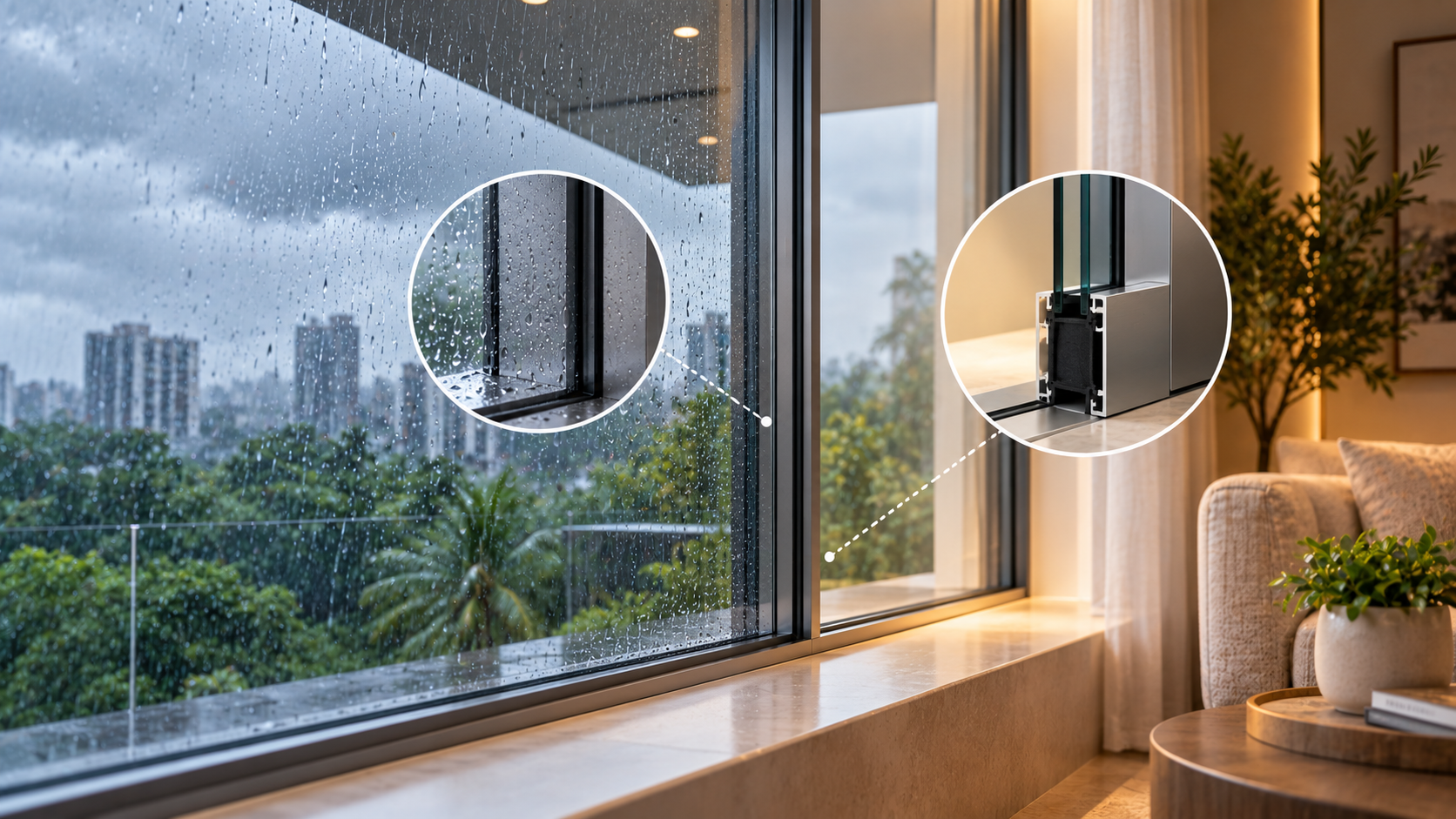
This includes selecting the appropriate aluminium profiles, deciding on window configurations, choosing the right glass specification, selecting premium hardware, and finalising colours or surface finishes.
Thermal performance, acoustic insulation, solar control, and safety requirements are all considered during this stage. A professional supplier provides a transparent quotation clearly outlining every component included in the project.
Stage Three: Fabrication
Once the design is approved, fabrication begins in a controlled manufacturing environment.
Aluminium profiles are precision-cut, assembled, glazed, and fitted with hardware using specialised equipment. Every completed unit undergoes quality inspection before leaving the factory to ensure dimensional accuracy and smooth operation.
Depending on project complexity, fabrication generally takes between two and six weeks, with custom systems or specialised glass requiring additional production time.
Stage Four: Site Preparation and Installation
Before installation begins, the site must be fully prepared. Openings should match the approved measurements, plastering must be complete, and waterproofing treatments should already be applied.
The installation team aligns each frame precisely to level and plumb before securing it to the structure with appropriate fixings. Accurate alignment is essential for smooth operation and long-term durability.
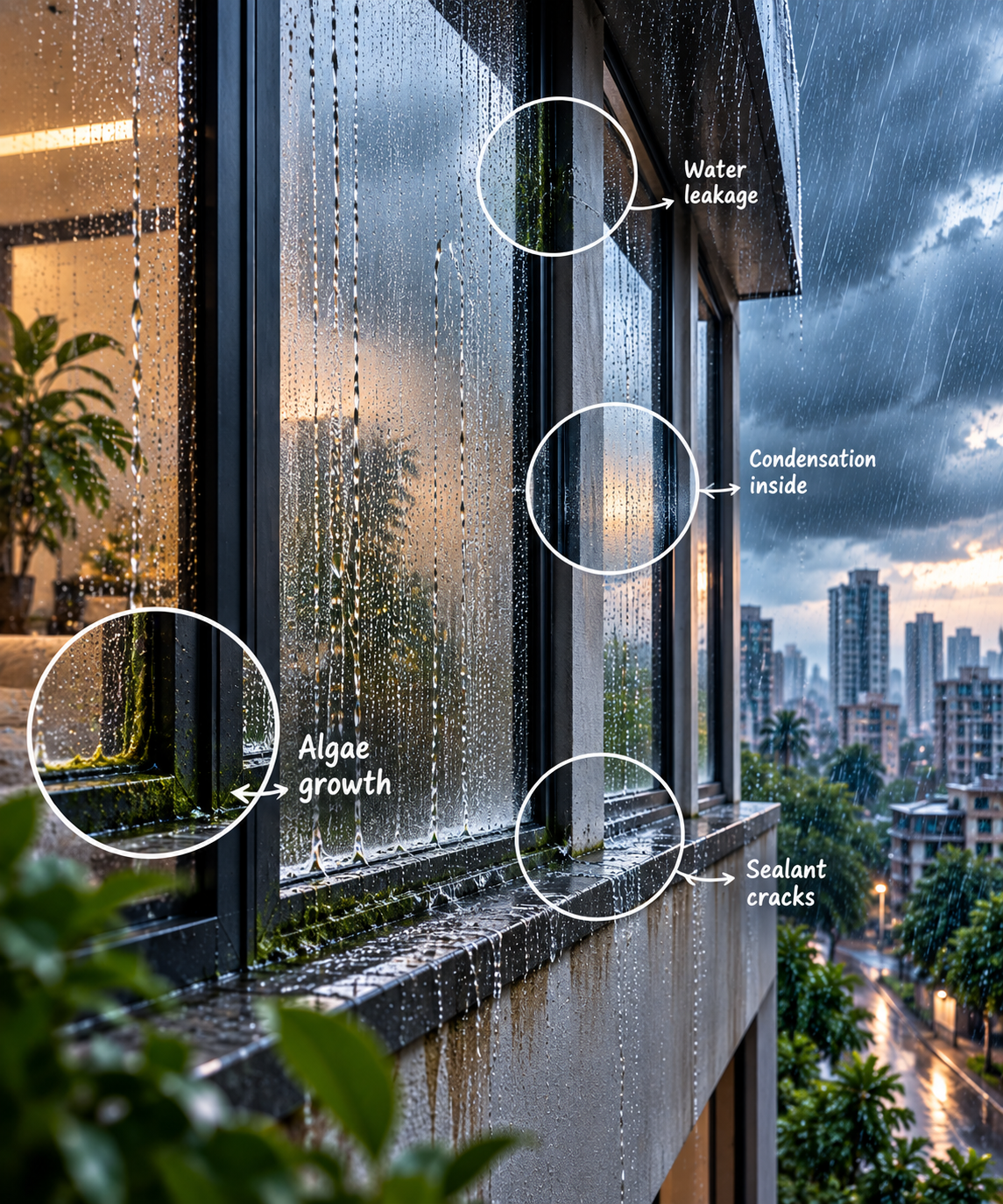
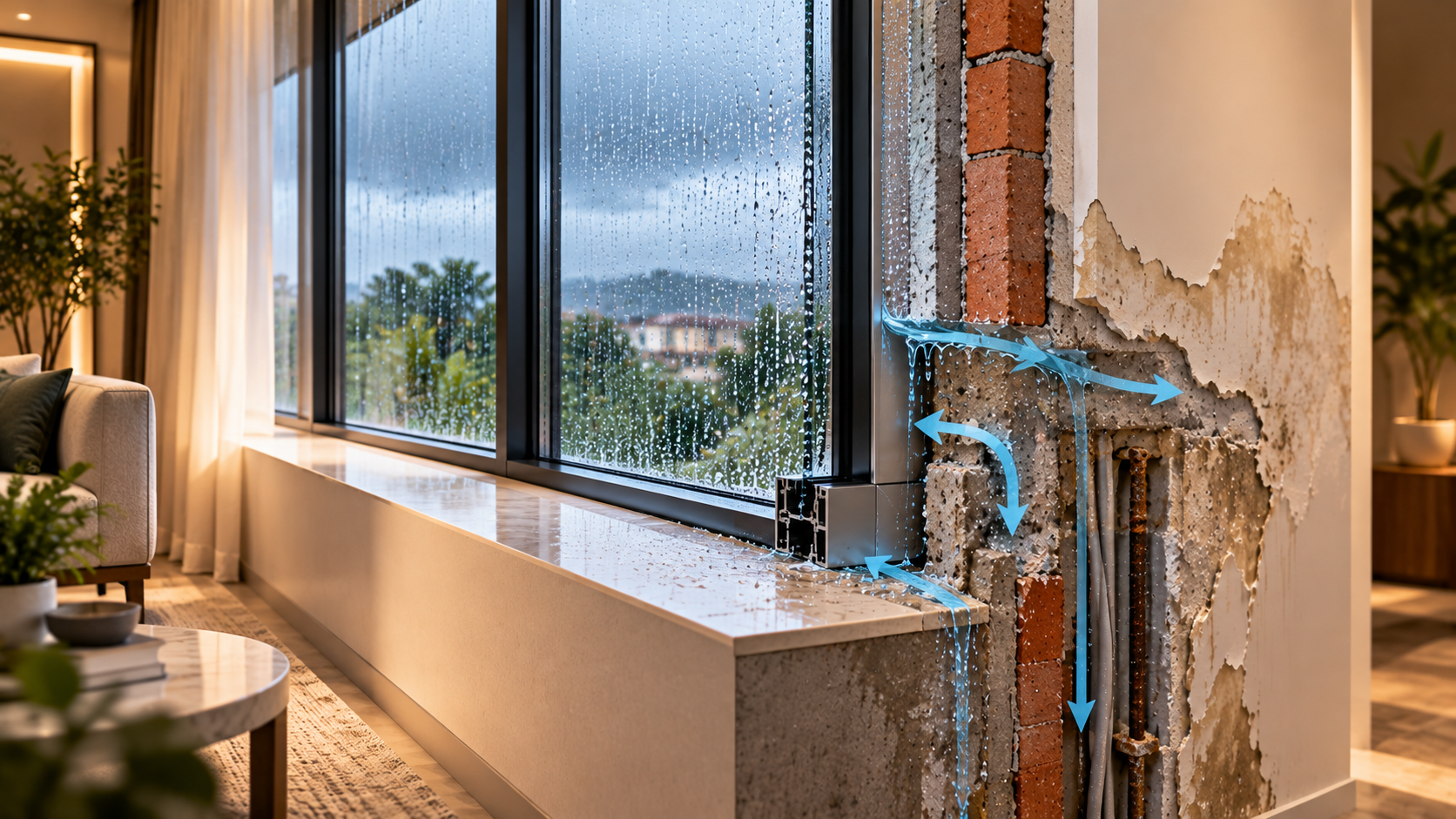
Once fixed, the junction between the frame and the surrounding wall is sealed using high-quality silicone sealant. Proper sealing at this stage plays a critical role in preventing future water leakage during the monsoon.
Stage Five: Glazing and Hardware Adjustment
Depending on the installation method, glass may be factory-fitted or installed after the frames are fixed on site.
Large glass panels require careful handling by trained professionals to ensure safe installation and proper seating within the frame.
After installation, every hardware component is calibrated. Rollers are adjusted for smooth sliding, hinges are aligned correctly, and locking mechanisms are fine-tuned to provide effortless operation and secure sealing.
Stage Six: Cleaning, Inspection, and Handover
The final stage is a comprehensive inspection before project completion.
Every window is opened, closed, and locked to verify smooth performance. Frames, glass, seals, and hardware are inspected carefully, while any protective films are removed and the entire system is cleaned.
Any remaining adjustments are completed before handover. Homeowners should also receive guidance on cleaning tracks, maintaining hardware, and scheduling future servicing if required.
Final Thought
A successful aluminium window and door project is never defined by the installation day alone. It is the result of careful planning, accurate measurements, quality manufacturing, skilled installation, and thorough quality control at every stage.
Understanding this complete process helps homeowners ask the right questions, choose reliable suppliers, and ensure that the finished windows deliver the performance, durability, and appearance they expect for many years to come.