By the time a damp patch appears on your wall, the leak is not new. Water has been moving inside that wall for weeks, and the stain is simply the point at which it finally reached the surface.
Understanding what happens in that hidden period explains why window leaks are so much more expensive to ignore than they first appear.
The Stain Is the Last Stage, Not the First
Plaster and masonry absorb a great deal of water before showing it. A wall can hold litres of moisture without any visible sign on the painted face.
What you eventually see is not the leak. It is the wall reaching saturation and giving up.
What Is Happening Behind the Paint
The sequence is consistent across most Indian construction:
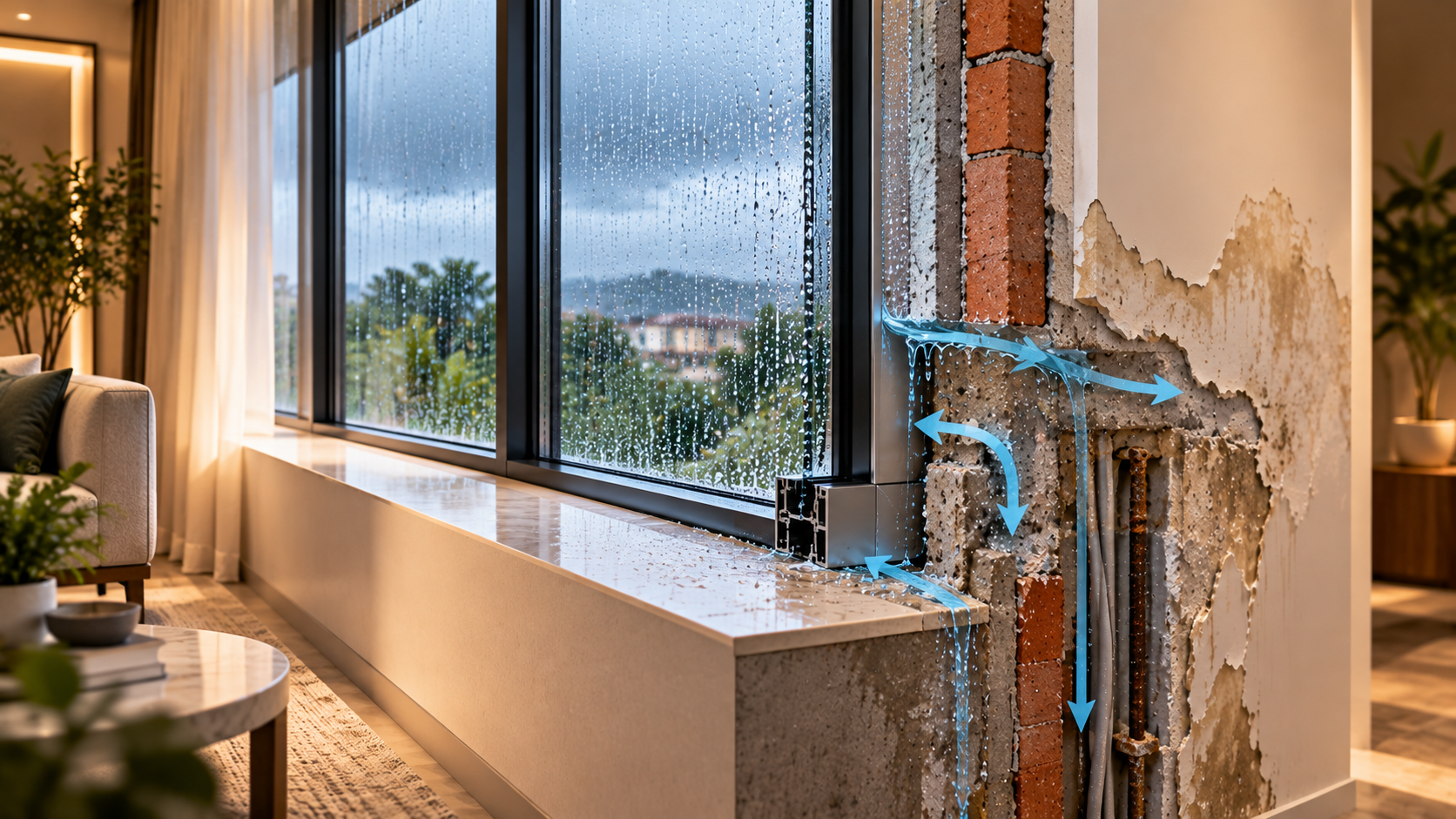
- Water enters at the frame-to-wall junction, usually through cracked sealant or a gap left during installation.
- It spreads sideways through the plaster, following the path of least resistance rather than running straight down.
- Salts dissolve and migrate, carried by the moisture toward the surface, where they crystallise as the white powdery efflorescence seen around older windows.
- Paint loses adhesion from behind, which is why it bubbles and peels even though the outer surface looks intact.
- Embedded steel begins to corrode where reinforcement or fixings sit within the wet zone, and corroding steel expands, cracking the concrete around it.
- Electrical conduit becomes a pathway, carrying moisture to switchboards and points well away from the window itself.
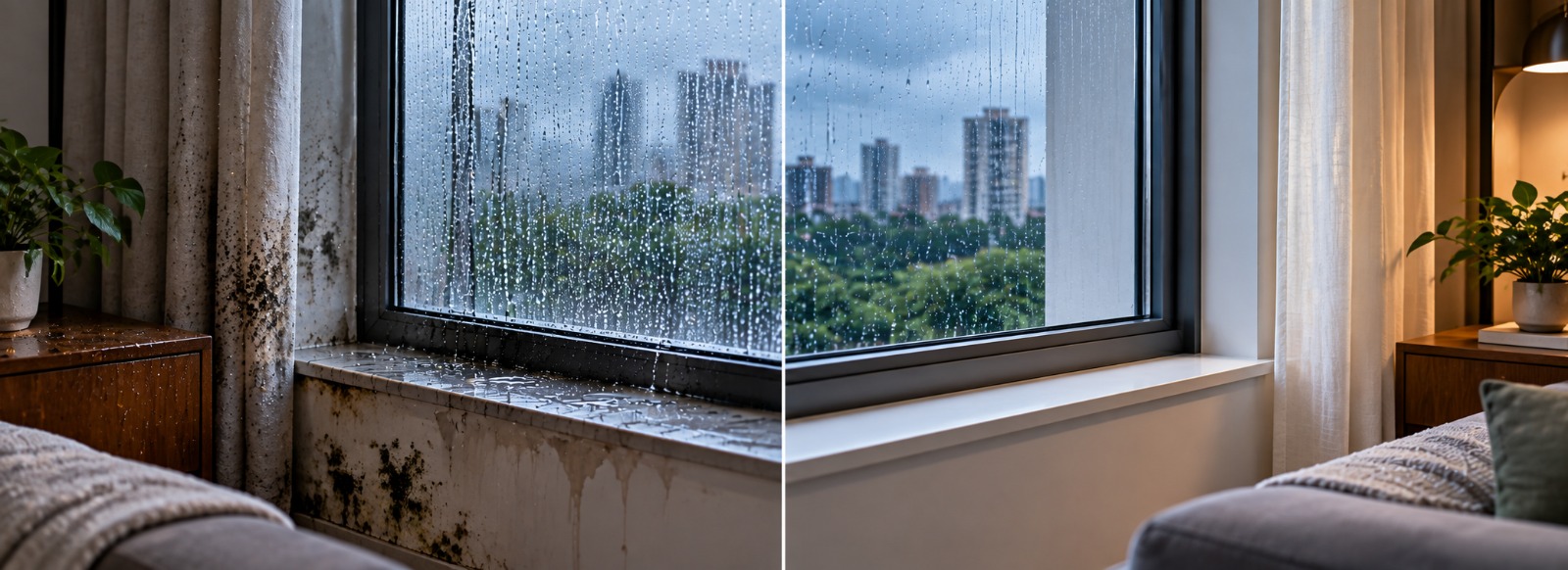
- Mould colonises the cavity, growing in the dark and staying there long after the surface has been repainted.
Why Repainting Never Works
Every monsoon, homeowners repaint a damp patch and watch it return the following year.
It returns because the paint was never the problem. Sealing the surface simply traps moisture inside the wall, where it continues doing exactly what it was doing before, with one less route out.
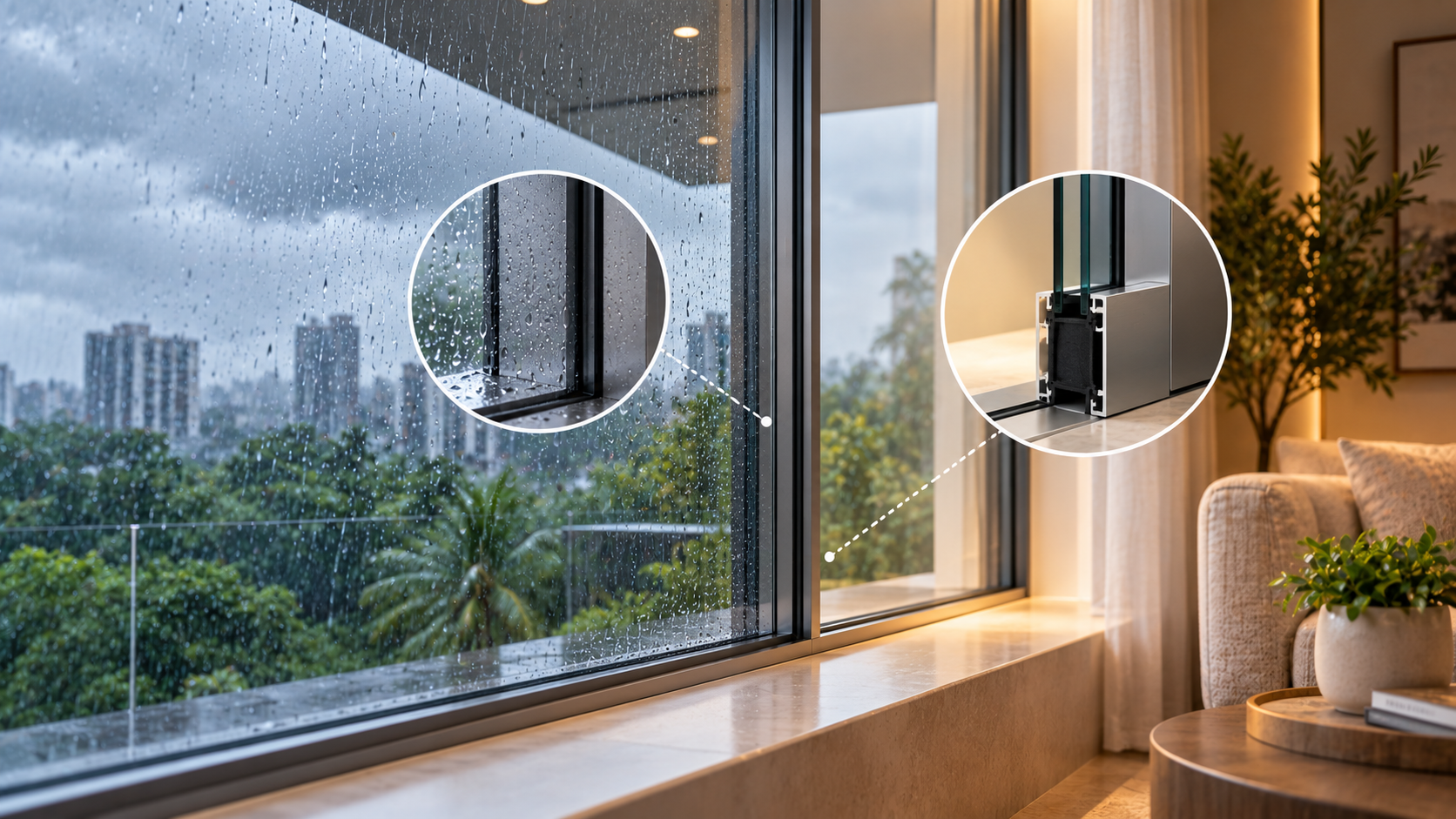
The leak has to be stopped at the window, not at the wall.
The Cost Difference
This is where the arithmetic becomes uncomfortable. Resealing a window junction is a small job done from a ladder in an afternoon.
Repairing a saturated wall means stripping plaster back to masonry, treating the substrate, addressing any corroded steel, checking electrical runs, replastering, curing and repainting. If the cycle has run for several seasons, the structural repair alone can exceed the cost of replacing the window entirely.
There is also a timing problem. A saturated wall cannot be replastered until it has dried thoroughly, and in monsoon conditions that can take weeks. The repair is not simply expensive it is slow, and it cannot begin at the moment you discover it.
Final Thought
A window leak is not a window problem for very long. Within a season it becomes a wall problem, and wall problems are expensive.
If you see staining, efflorescence or peeling paint anywhere near a window frame this monsoon, the useful response is to investigate the window immediately, not to schedule a repaint. The stain is a symptom, and treating symptoms has never fixed anything.