When homeowners discuss waterproof windows, the conversation usually centres on the frame material and the glass. While both are important, the components that actually determine whether water stays outside or enters your home are often the least visible: gaskets, sealants, and drainage systems.
These components form the functional core of every waterproof aluminium window system. Without them working together correctly, even the most precisely engineered frame can allow water ingress during heavy monsoon conditions.
Understanding how these elements function helps homeowners make better decisions when selecting aluminium windows for Indian weather.
What Gaskets Do
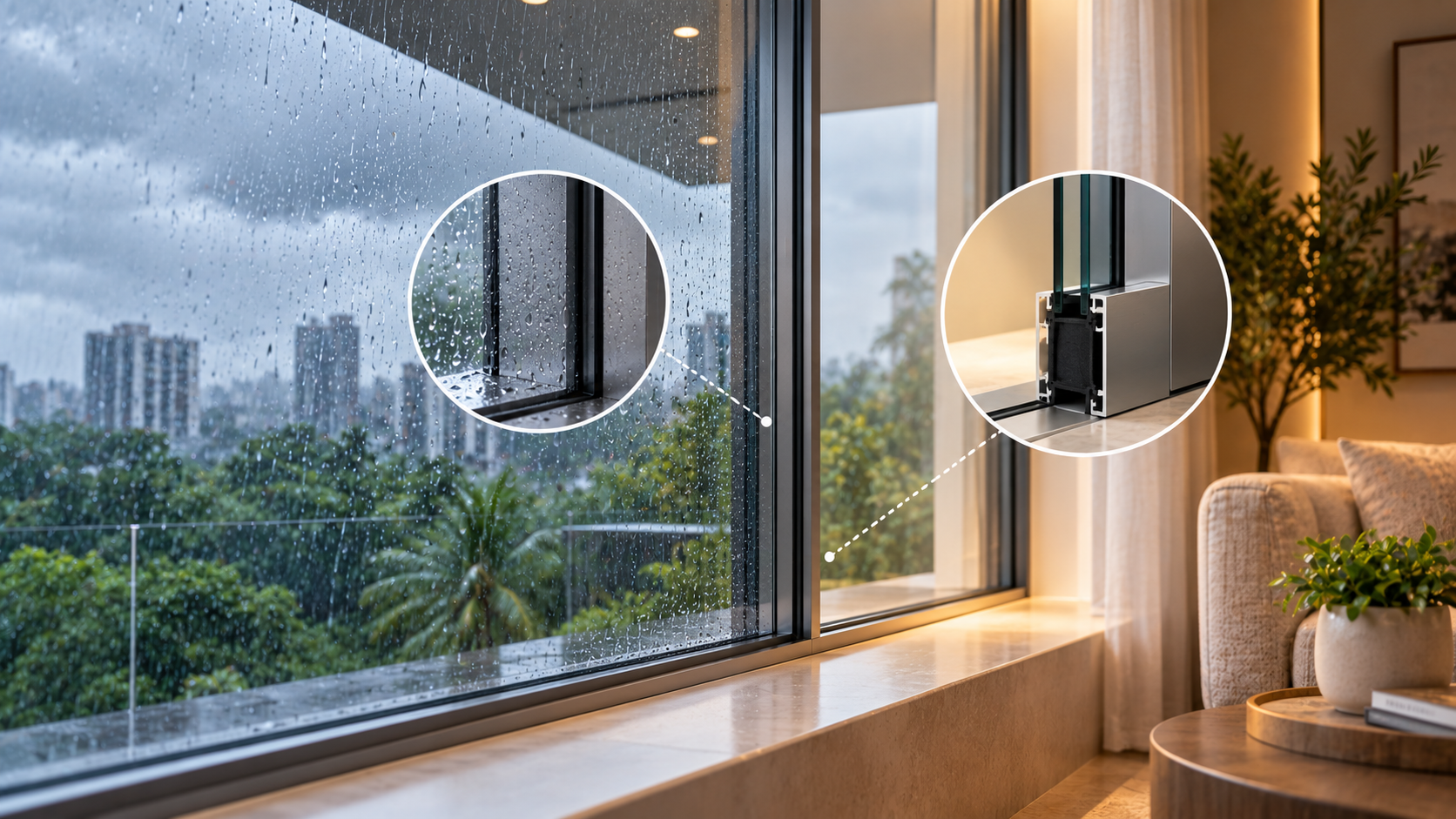
A gasket is a flexible strip, usually made from EPDM rubber or silicone, that runs along the edge of the window shutter. When the window is closed, the gasket compresses tightly between the shutter and the frame, creating a weatherproof seal that blocks water and air from entering.
High-performance aluminium windows commonly use EPDM gaskets because they maintain their flexibility across extreme temperatures and prolonged exposure to sunlight, humidity, and rainfall. Unlike lower-grade materials that become brittle or lose compression over time, EPDM continues to provide a reliable seal throughout multiple monsoon seasons.
When a gasket loses its elasticity, tiny gaps begin to appear, allowing water and air to enter the home during heavy rain.
What Sealants Do
Sealants protect two critical areas within a window system: the connection between the glass and the frame, and the joint between the frame and the surrounding wall.
The glass-to-frame seal prevents water from entering around the edges of the glass, while the frame-to-wall seal closes the gap between the aluminium frame and the building structure. Because buildings naturally expand, contract, and settle over time, these sealants must remain flexible without cracking.
Neutral-cure silicone is widely preferred because it bonds effectively with both aluminium and masonry while maintaining flexibility throughout its service life. Poor application or incorrect sealant selection can eventually allow water to enter the wall cavity, where damage often remains hidden until it becomes significant.
What Drainage Systems Do
Even the best aluminium window systems are designed with the understanding that a small amount of water may enter the outer track during heavy rain. The purpose of the drainage system is to remove that water before it reaches the interior.
Integrated drainage channels guide water towards strategically positioned weep holes, allowing it to flow safely outside. The effectiveness of this system depends on the profile design, the size and placement of the drainage outlets, and proper installation.
Regular cleaning is equally important. Dust, leaves, and debris can block drainage holes over time, preventing water from escaping and increasing the risk of overflow during the monsoon.
How These Components Work Together
A waterproof aluminium window is built on multiple layers of protection rather than a single feature.
Gaskets prevent water from passing through the opening when the window is closed. Sealants protect the joints around the frame and glass. Drainage systems safely remove any water that enters the outer track before it can accumulate.
If one of these layers fails, the remaining components are forced to work harder. A damaged gasket places greater demand on the drainage system. Blocked drainage increases pressure on the sealants. Every element contributes to the overall waterproof performance of the window.
Final Thought
A waterproof aluminium window is not defined by the frame alone. It is the result of high-quality gaskets, durable sealants, efficient drainage channels, precision engineering, and proper installation working together as one complete system.
By understanding the role of these hidden components, homeowners can ask better questions, compare products more effectively, and choose aluminium window systems that deliver dependable performance through every monsoon season.