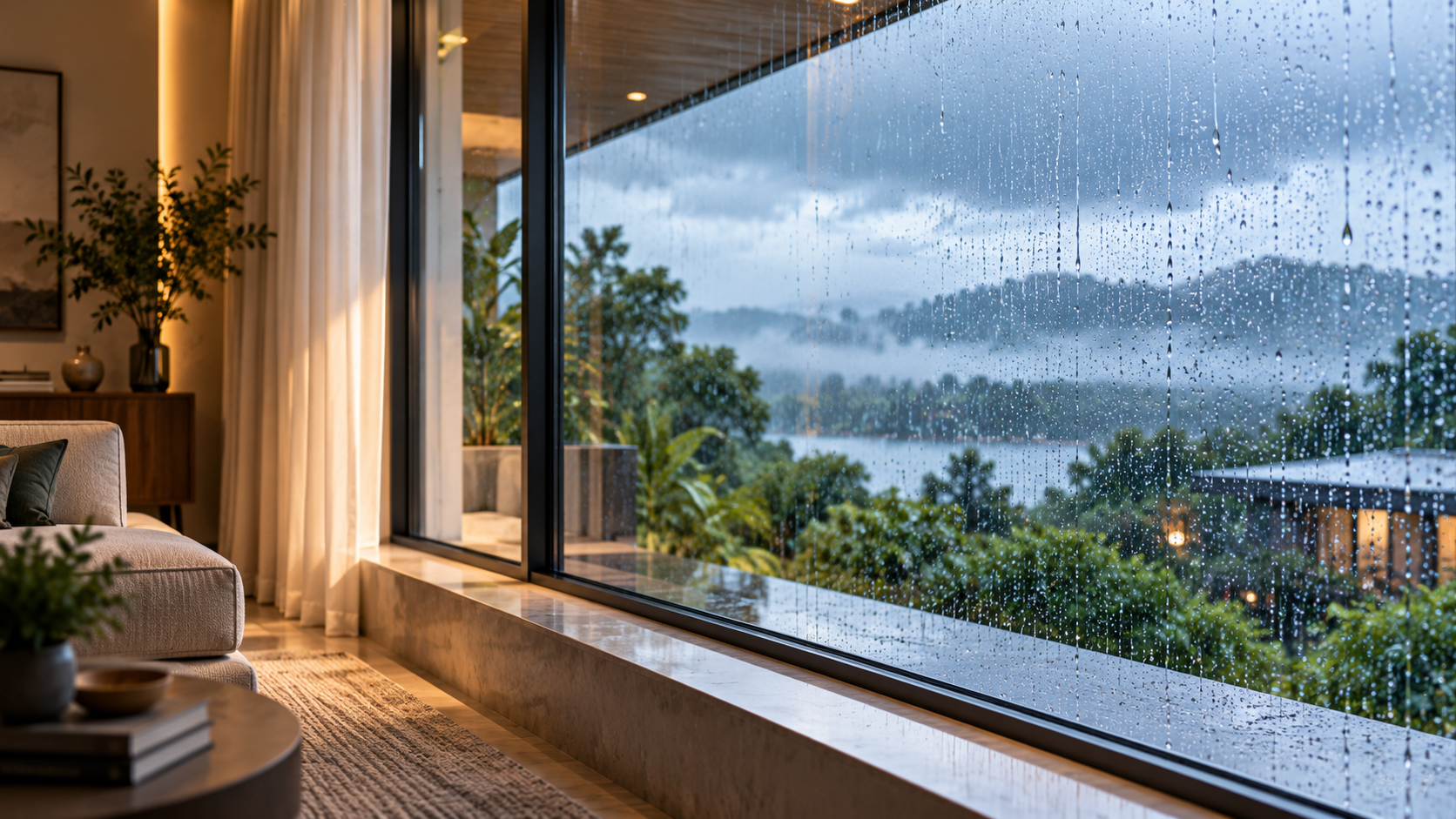
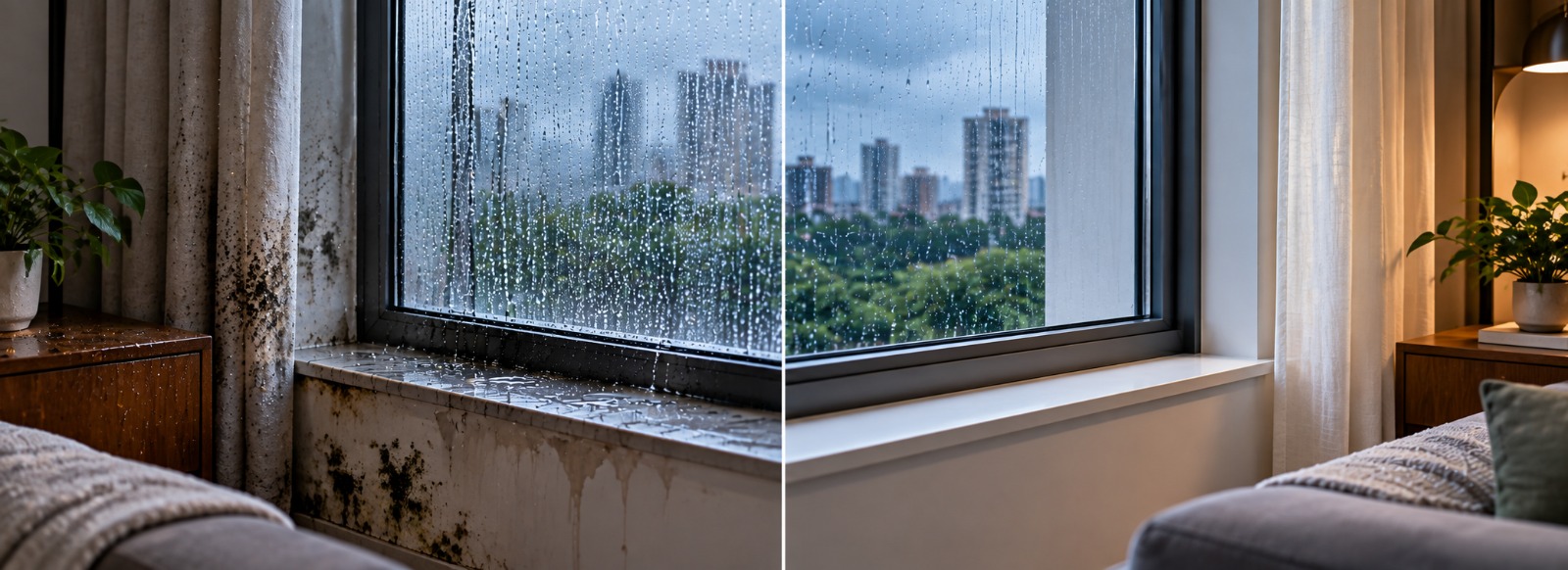
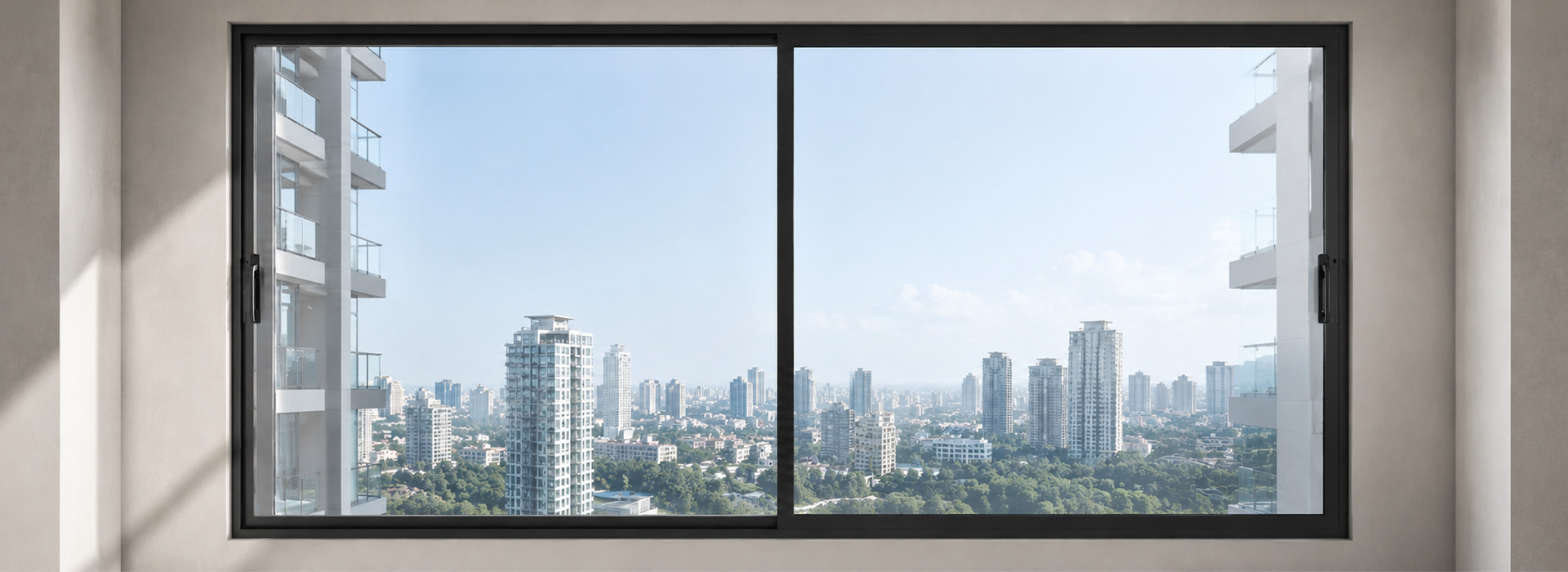
Every monsoon, the same complaints surface. Wooden windows that no longer close because the frame has swollen. Steel windows with rust streaks running down the wall. Frames that have shifted out of alignment after years of moisture exposure, leaving visible gaps where there were none before.
These are not random failures. They are predictable consequences of using materials that are not suited to what the Indian monsoon actually delivers.
Aluminium windows behave differently, and the reasons are rooted in how the material responds to the conditions that break down everything else.
Why Wood Fails in the Monsoon
Wood is a porous, organic material that naturally absorbs moisture from the surrounding air. During the rainy season, this causes the frame to expand, making shutters difficult to open and close while reducing the precision of the original installation.
As this cycle of swelling and drying repeats over successive monsoons, the wood begins to crack, split, and gradually lose its structural integrity. Paints and varnishes can delay the process, but they cannot prevent the wood itself from reacting to moisture.
In high-rainfall environments, wooden windows are continuously exposed to conditions that accelerate long-term deterioration.
Why Steel Fails in the Monsoon
Steel reacts with water and oxygen to form rust. During the monsoon, prolonged humidity and rainfall create the perfect environment for corrosion to develop.
Rust usually begins where protective coatings have been scratched or damaged. Over time, it spreads beneath the coating, weakening the frame, affecting structural strength, and reducing the window’s ability to seal properly.
In coastal regions, salt-laden air accelerates corrosion even further, making steel frames particularly vulnerable.
Why Aluminium Does Not React the Same Way
Aluminium is a non-ferrous metal, meaning it contains no iron and therefore cannot rust like steel.
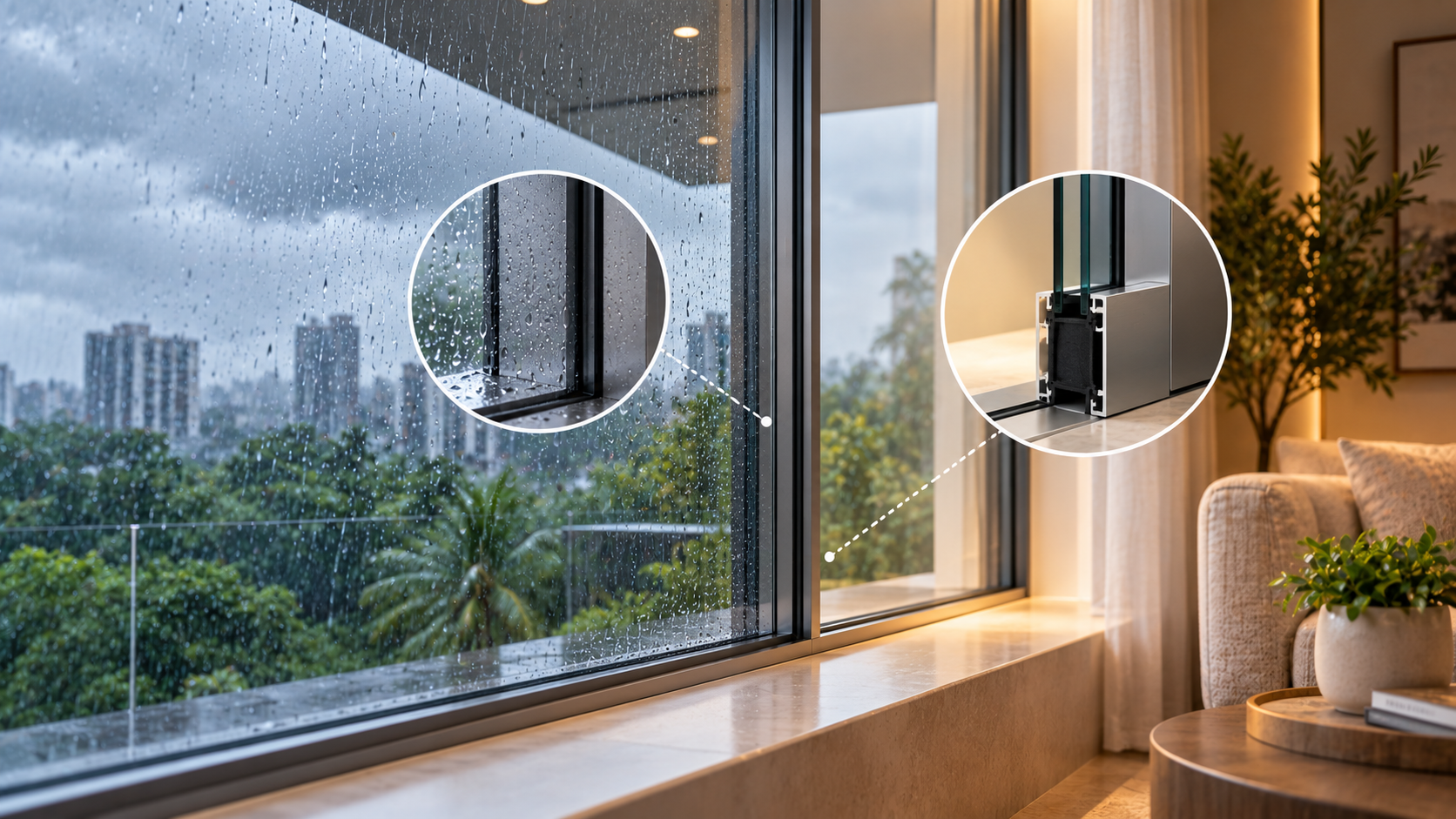
When aluminium is exposed to air, it naturally forms a thin oxide layer that protects the surface from further corrosion. This protective layer develops automatically and provides long-lasting resistance against moisture and environmental exposure.
Unlike wood, aluminium does not absorb water. It maintains its dimensions regardless of humidity or rainfall, allowing the frame, shutter, seals, and hardware to continue working exactly as intended season after season.
The Role of Surface Treatment
Although aluminium naturally resists corrosion, surface treatments further improve durability, particularly in coastal and high-humidity environments.
High-quality powder coating creates a durable, UV-resistant finish that protects the surface while maintaining colour consistency over many years. Proper application, curing, and coating thickness all contribute to long-term performance.
Anodising offers another premium finish by strengthening the natural oxide layer through an electrochemical process, creating an even harder and more durable protective surface for demanding environments.
Hardware and the Monsoon
The frame is only one part of a high-performance window system. Rollers, hinges, locking mechanisms, and handles must also be designed to withstand prolonged moisture exposure.
Premium aluminium window systems use stainless steel hardware and corrosion-resistant components that continue operating smoothly throughout the rainy season. Proper lubrication and quality materials ensure long-term reliability without seizing or corrosion.
Final Thought
Aluminium windows do not warp, rust, or swell because the material simply does not react to moisture the way wood and steel do. Its dimensional stability, corrosion resistance, and durable surface treatments allow it to perform consistently in even the harshest monsoon conditions.
For homeowners across India, that means fewer repairs, lower maintenance, and the confidence that their windows will continue to perform reliably year after year—no matter how heavy the rains become.