The monsoon season in India arrives quickly, and most homeowners are focused on waterproofing walls, checking roofs, and clearing drains. Windows are often the last item on the list, if they are on the list at all.
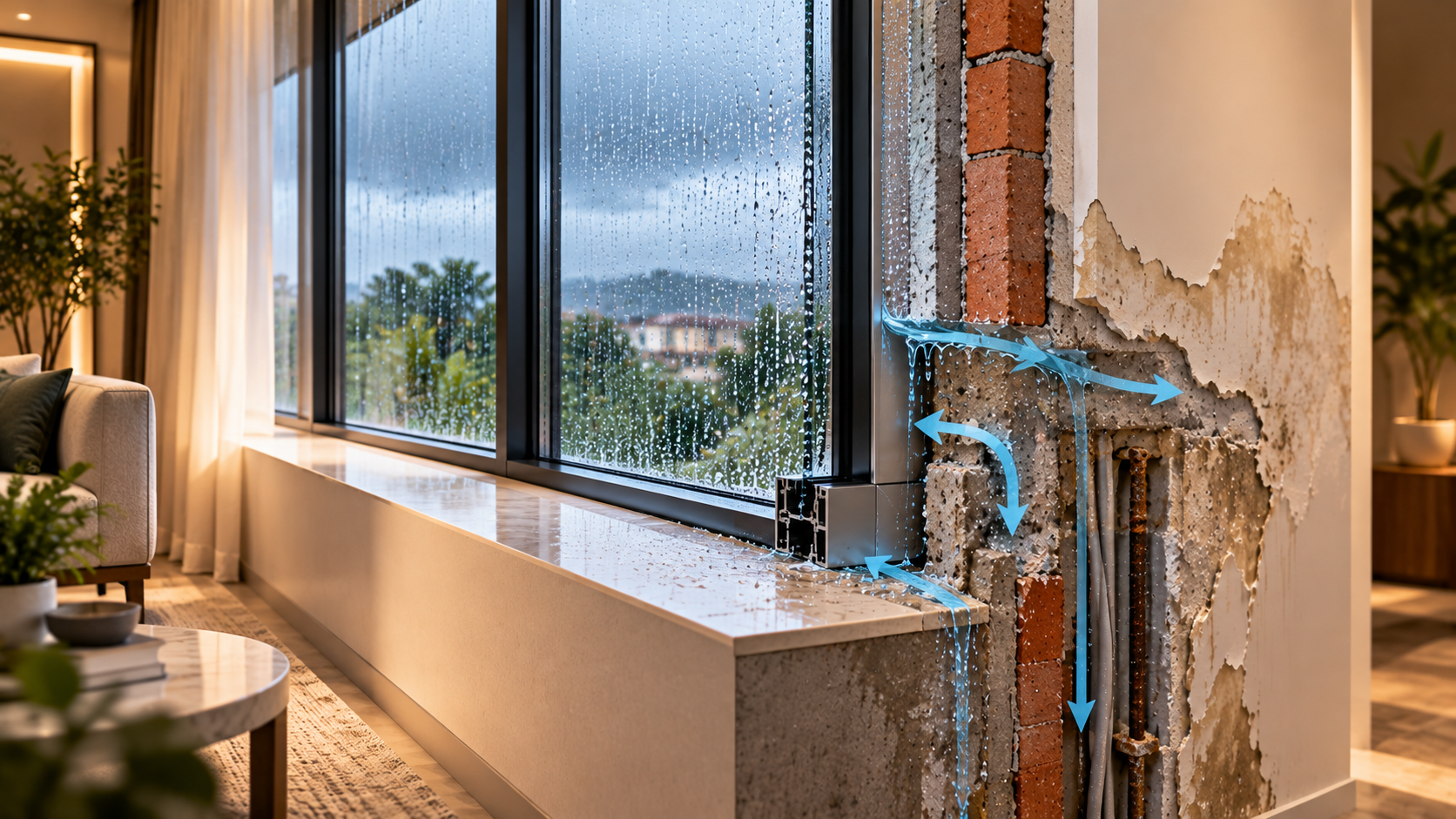
This is a mistake. Windows are one of the primary points through which water enters a home during heavy rain. They are also among the easiest elements to prepare if the work is done before the season begins rather than during it.
The following checklist applies to aluminium windows and doors and covers everything worth doing before the first heavy rain of the year.
Check and Clean the Tracks
Sliding window tracks collect dust, debris, and dried sealant during the dry months. Once the rains arrive, this debris can block the drainage holes that are designed to carry water away.
Clean the tracks thoroughly with a dry brush before wiping them down. Pay special attention to the drainage holes at the base of the track. A thin wire or toothpick is usually enough to remove any blockage. Once cleaned, pour a small amount of water into the track to ensure it drains out properly.
This simple maintenance step helps prevent one of the most common causes of water leakage in sliding aluminium windows.
Inspect Gaskets and Seals
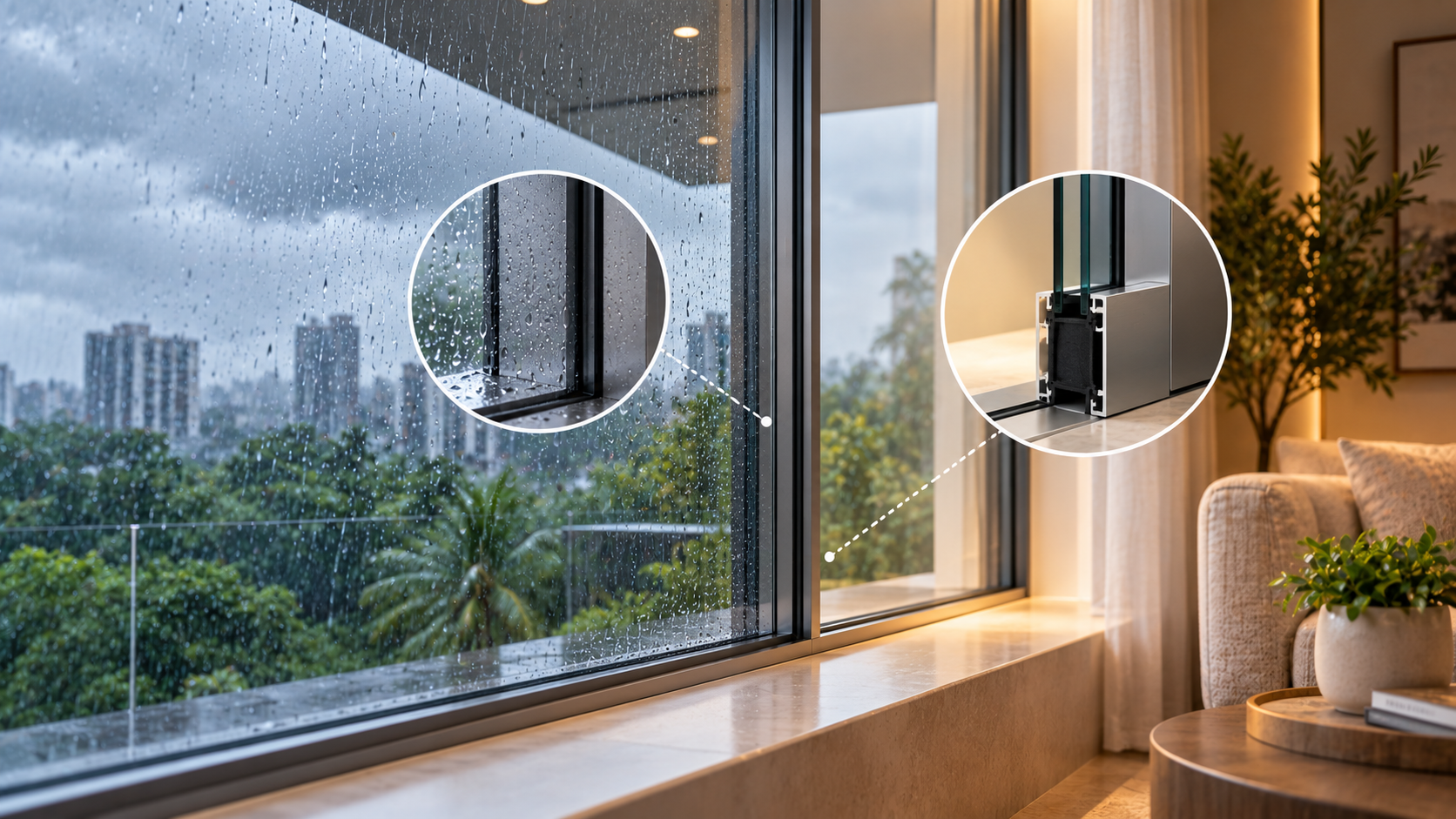
Rubber or EPDM gaskets create the weather-tight seal between the window frame and the shutter. Over time, they can harden, crack, or lose flexibility after prolonged exposure to sunlight and changing temperatures.
Run your fingers along the gasket and check for brittle sections, cracks, or gaps. A damaged gasket cannot compress properly when the window closes, allowing rainwater and air to enter the home.
Replacing worn gaskets before the monsoon is quick, affordable, and far easier than dealing with water damage later.
Check the Sealant at the Frame-to-Wall Junction
The sealant between the aluminium frame and the surrounding wall is a critical barrier against water ingress. Over time, this sealant can crack, shrink, or separate from the wall.
Inspect the entire perimeter of every window. If you notice any gaps or damaged sections, remove the old sealant and apply a fresh bead of neutral-cure silicone suitable for aluminium and masonry. Always ensure the surface is clean and dry before resealing.
Test All Hardware
Open and close every window completely to ensure smooth movement and proper alignment.
Check that each locking mechanism engages securely. A lock that does not close properly prevents the window from sealing tightly, allowing rain and wind to enter during storms.
If any component feels stiff or noisy, apply a silicone-based lubricant to rollers, hinges, and locking points. Avoid oil-based lubricants, as they attract dust and dirt.
Look for Any Visible Frame Damage
Inspect the aluminium frames from both inside and outside the home.
Check for dents, chips in the powder coating, cracks, or signs that the frame has shifted away from the wall. Although aluminium does not rust, damaged coatings in coastal environments should be repaired promptly to maintain long-term protection and appearance.
Verify That Drainage Slopes Are Correct
If your windows include exterior sills, confirm that they slope away from the building.
A proper outward slope allows rainwater to drain away naturally. Flat or inward-sloping sills encourage water to collect around the frame, increasing the risk of leaks and damp walls during heavy rainfall.
Clean the Glass
Cleaning the glass improves visibility during heavy rain while also removing dirt and residue that may interfere with the way the window seals against the gasket.
It is a simple task that contributes to both appearance and performance before the rainy season begins.
Final Thought
Completing this maintenance checklist takes only a few hours, but it can prevent costly repairs caused by water damage throughout the monsoon.
Aluminium windows and doors are built for long-term durability, but like any high-performance system, they perform best when they receive timely care and maintenance.
The best time to prepare your windows is before the first heavy rain arrives—not after leaks begin.