Every year, the monsoon arrives with the same promise and the same problems. The relief from summer heat is welcome. What is not welcome is the water that finds its way through poorly sealed windows, the dampness that spreads across walls, and the swelling frames that no longer close properly.
For most Indian homeowners, this has become an annual cycle of dealing with water damage that was entirely avoidable. The root cause is almost always the same: windows that were not designed or installed to handle what the Indian monsoon actually demands.
Choosing the right aluminium windows and doors, and ensuring they are properly installed, is the most effective way to break that cycle.
Here is how to approach it.
1. Understand What the Monsoon Actually Does to Windows
The monsoon is not just rain. It is a combination of sustained water pressure, high humidity, strong winds, and rapid temperature changes, all occurring simultaneously and over an extended period.
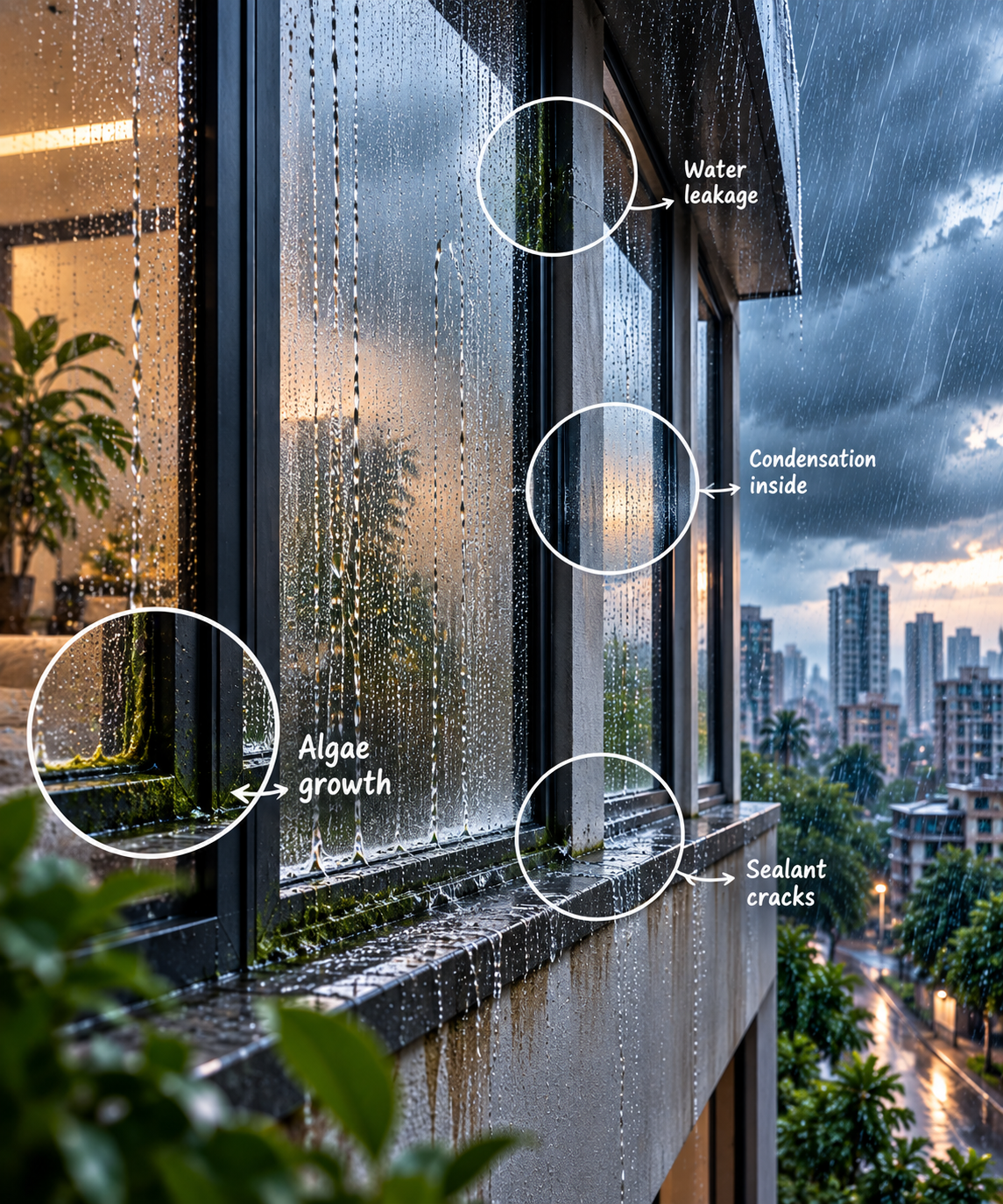
Standard windows that perform acceptably in dry conditions are often exposed during this season. Frames that are not sealed correctly allow water ingress. Tracks without drainage paths accumulate water and push it inward. Glass that is not properly fitted allows air and moisture to enter around the edges.
The monsoon does not create new problems. It reveals the ones that already existed.
2. Choose Aluminium Over Other Materials
When it comes to monsoon performance, material choice matters significantly.
Wooden frames absorb moisture, swell, and lose their fit. Steel frames corrode. uPVC can lose rigidity under sustained pressure. Aluminium windows and doors, by contrast, do not absorb water, do not warp, and do not rust. Their dimensional stability means the frame holds its shape regardless of how much rain falls or how long the humidity persists.
For Indian homes, particularly in coastal cities, high-rainfall zones, and areas with prolonged monsoon seasons, aluminium is not just a preference. It is the logical choice.
3. Prioritise Sealing Systems
A frame that does not leak is one thing. A sealing system that actively prevents water entry is another.
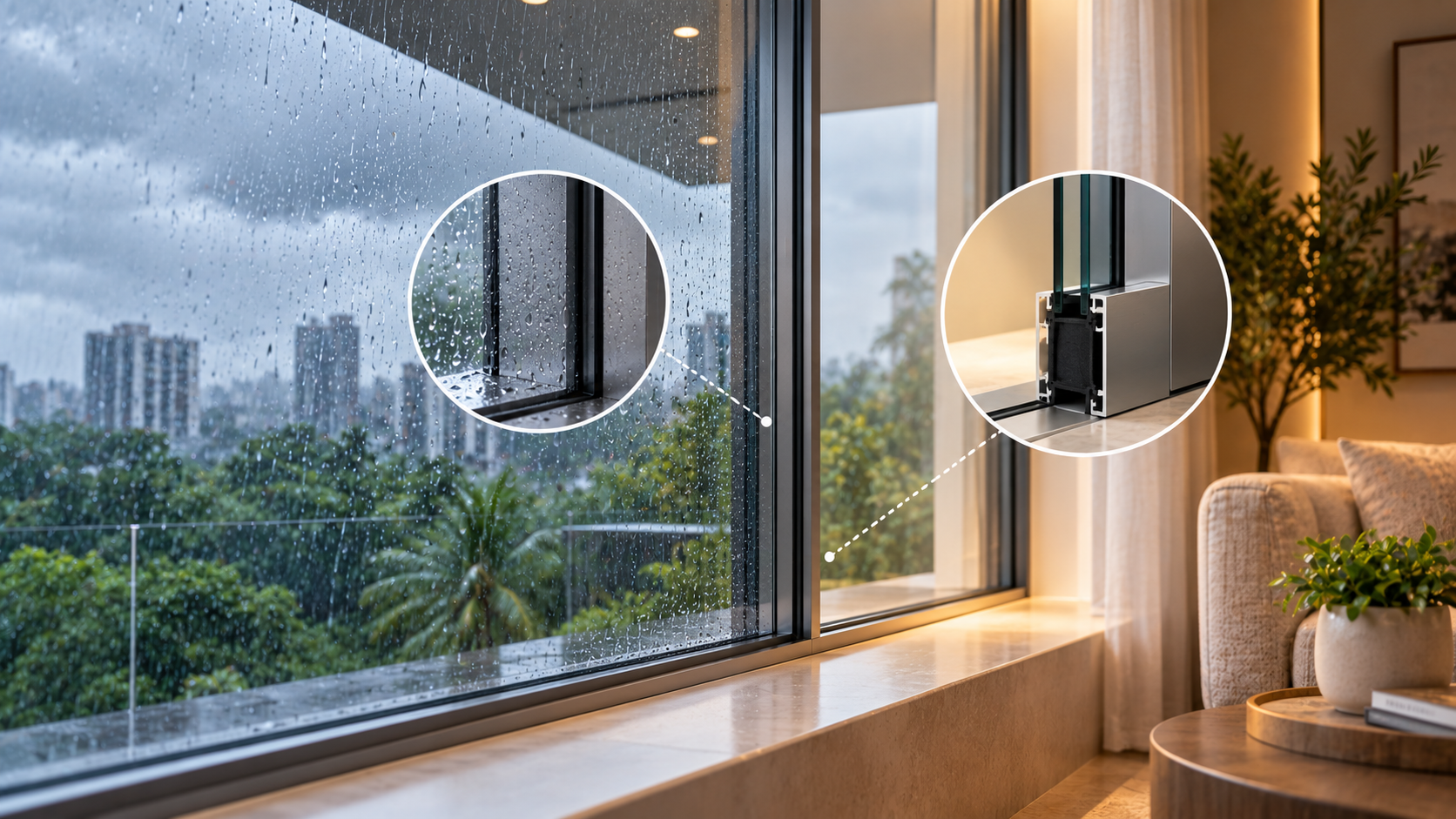
High-performance aluminium windows and doors use multi-layer sealing arrangements, including EPDM gaskets, brush seals, and co-extruded rubber strips, to create a barrier against wind-driven rain. These systems are designed to maintain their elasticity and compression across temperature ranges, which means they perform consistently throughout the monsoon season.
When evaluating any system, ask specifically about the sealing arrangement. It is one of the most important features to verify before installation.
4. Ensure Proper Drainage Is Designed In
One of the most overlooked aspects of monsoon-ready windows is drainage.
Water that enters the track system, either from direct rain or condensation, needs a designed path to exit. Without drainage channels and weep holes in the right positions, water accumulates in the track, rises, and eventually enters the interior.
Quality aluminium windows and doors include concealed drainage systems as part of the profile design. These direct water outward and downward without allowing it to pool. This is a feature of the system, not an add-on, and it must be present before installation.
5. Do Not Overlook Installation Quality
Even the best system will leak if installation is handled carelessly.
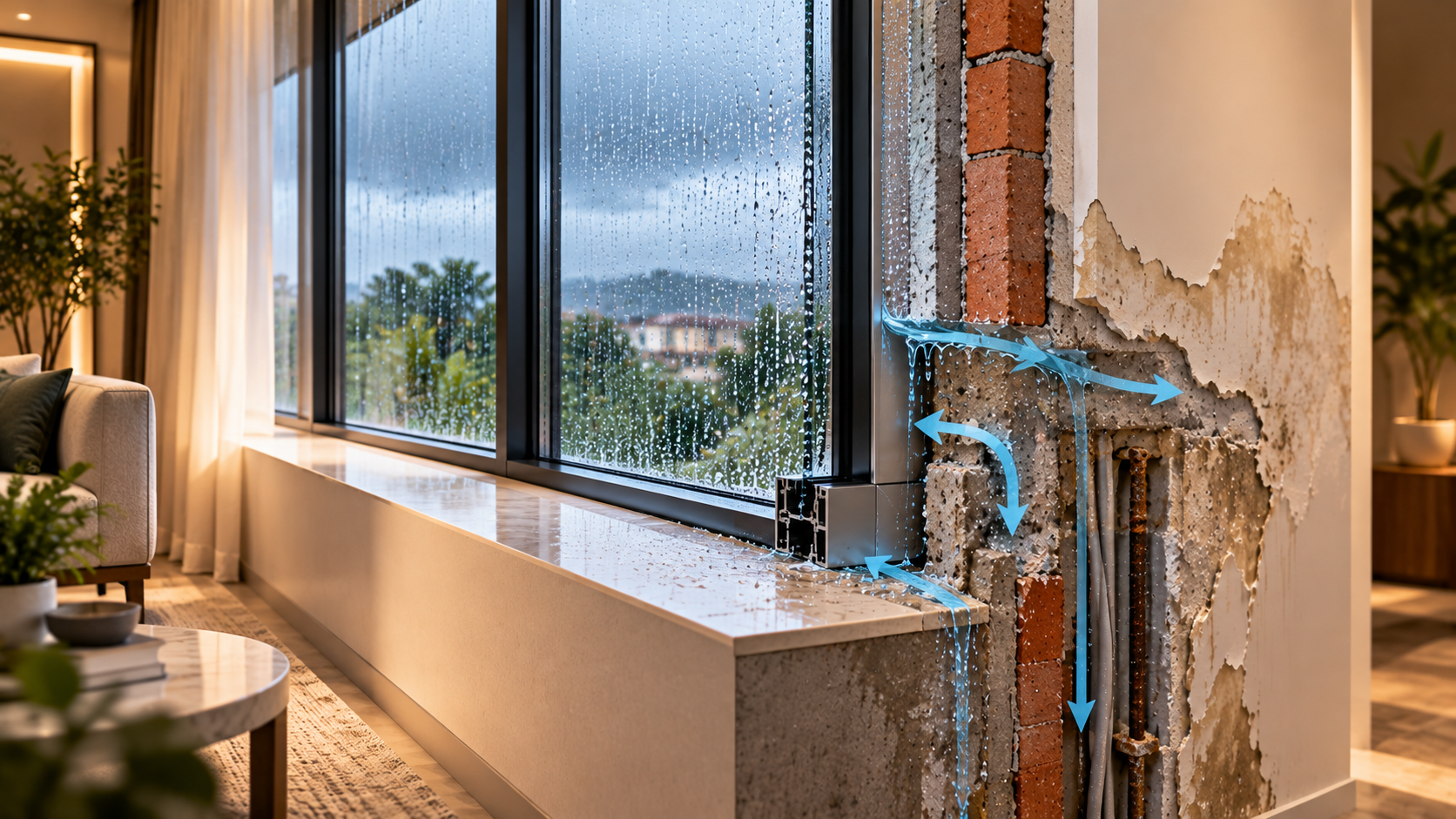
Proper waterproofing at the junction between the window frame and the wall is critical. Sealant must be applied correctly, drainage must be aligned, and the frame must be level. If any of these details are missed, the monsoon will find the gap.
This is why installation should always be handled by experienced professionals who understand how the system integrates with the wall, not by general labour treating it as a standard fitting job.
6. Inspect and Prepare Before the Season Begins
If your home already has aluminium windows and doors installed, the period just before the monsoon is the right time to inspect them.
Check that gaskets are intact and not compressed or cracked. Ensure tracks are clean and drainage holes are not blocked by dust or debris. Verify that handles and locking systems engage properly, as a window that does not close fully will not seal correctly under wind pressure.
Minor issues caught before the monsoon are significantly cheaper and easier to address than damage caused after water has already entered.
Final Thought
Monsoon-proofing a home is not a single action. It is the result of making the right decisions at the material selection stage, the system specification stage, and the installation stage.
Aluminium windows and doors, when chosen and installed correctly, make the monsoon a non-event rather than a recurring problem. They hold their shape, seal against rain and wind, and drain water away without any intervention required.
The home should be a place where the monsoon is enjoyed, not endured.