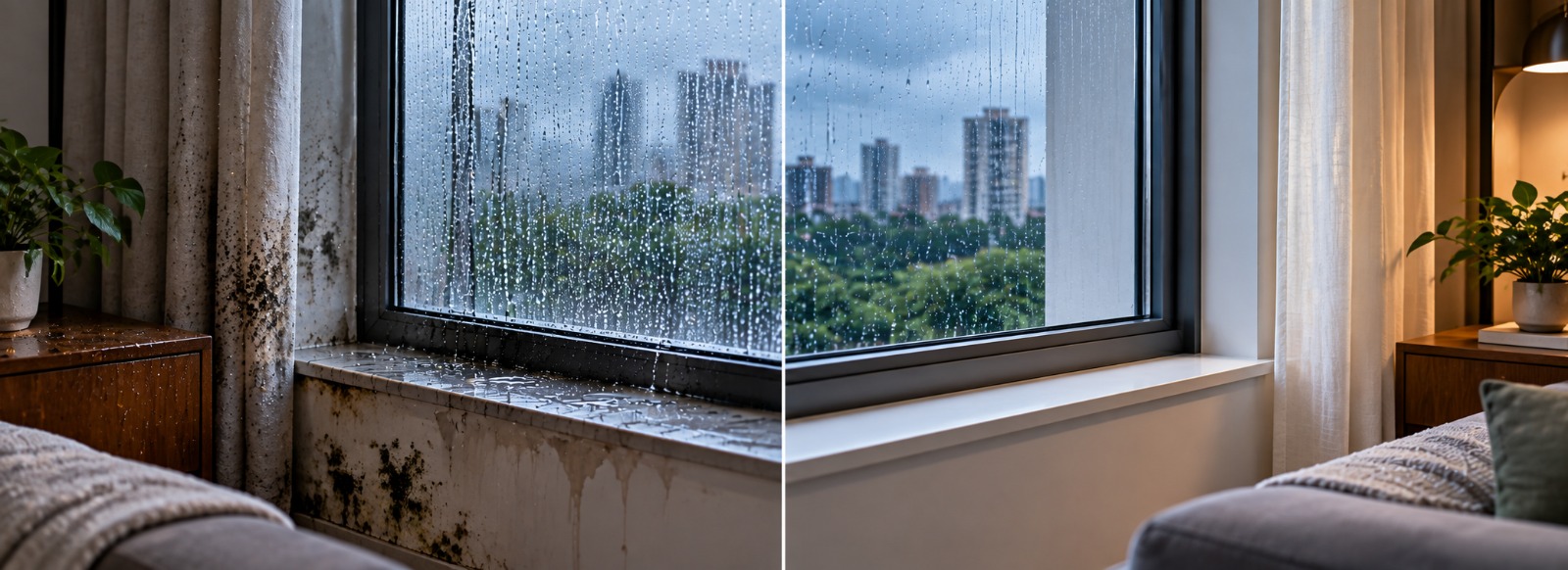
Most homeowners discover their windows are failing at the worst possible moment. Mid-monsoon, when the rain is heaviest, the dampness appears on the wall, the frame starts to rattle, or a thin stream of water begins to trace its way across the sill.
By that point, the window has already been compromised. The question is no longer whether it needs attention. It is how much damage has already been done.
Knowing the signs of a failing window system before the monsoon peaks gives you the opportunity to act before the problem becomes expensive.
Here is what to look for.
1. Water Stains or Dampness Around the Frame
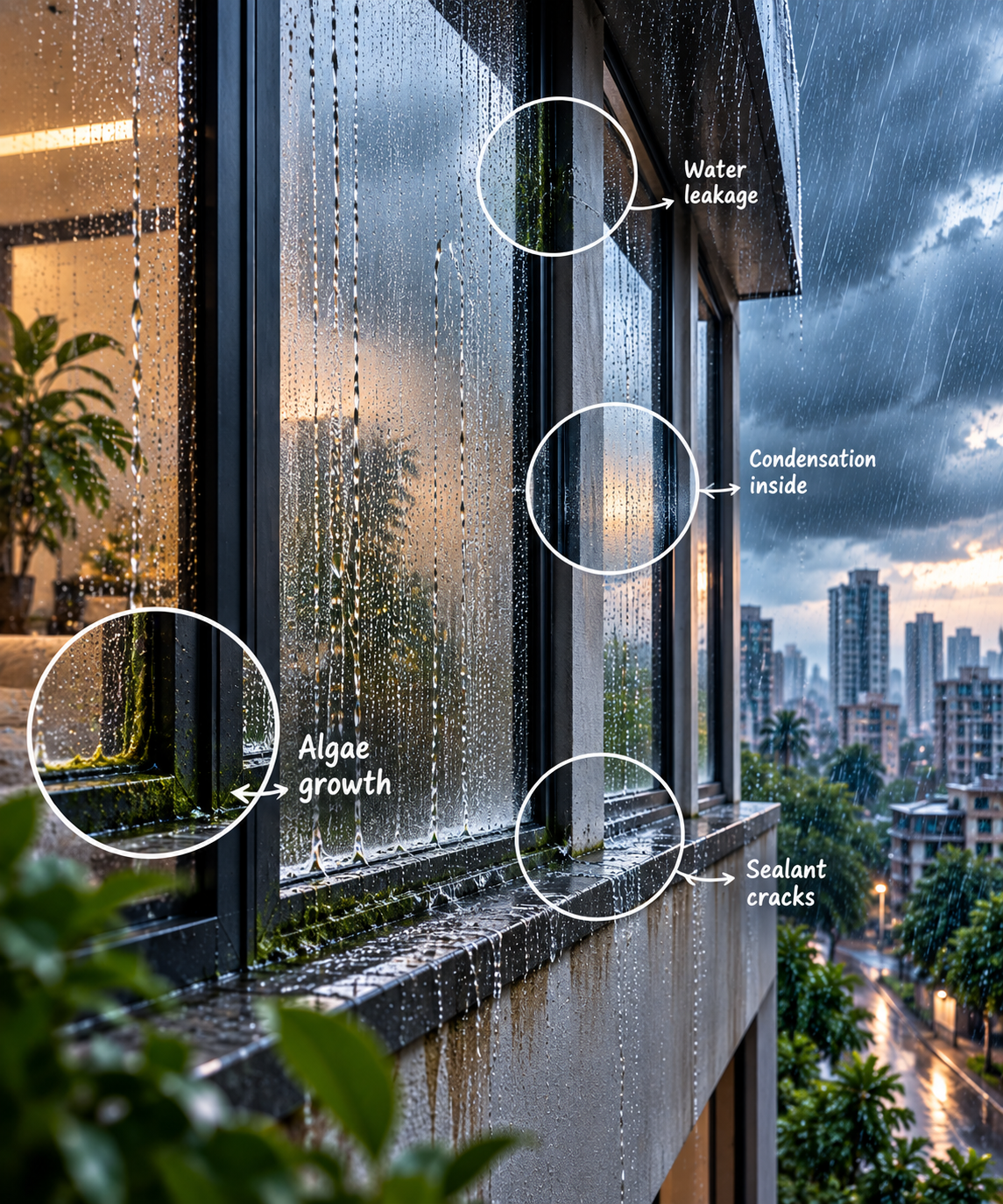
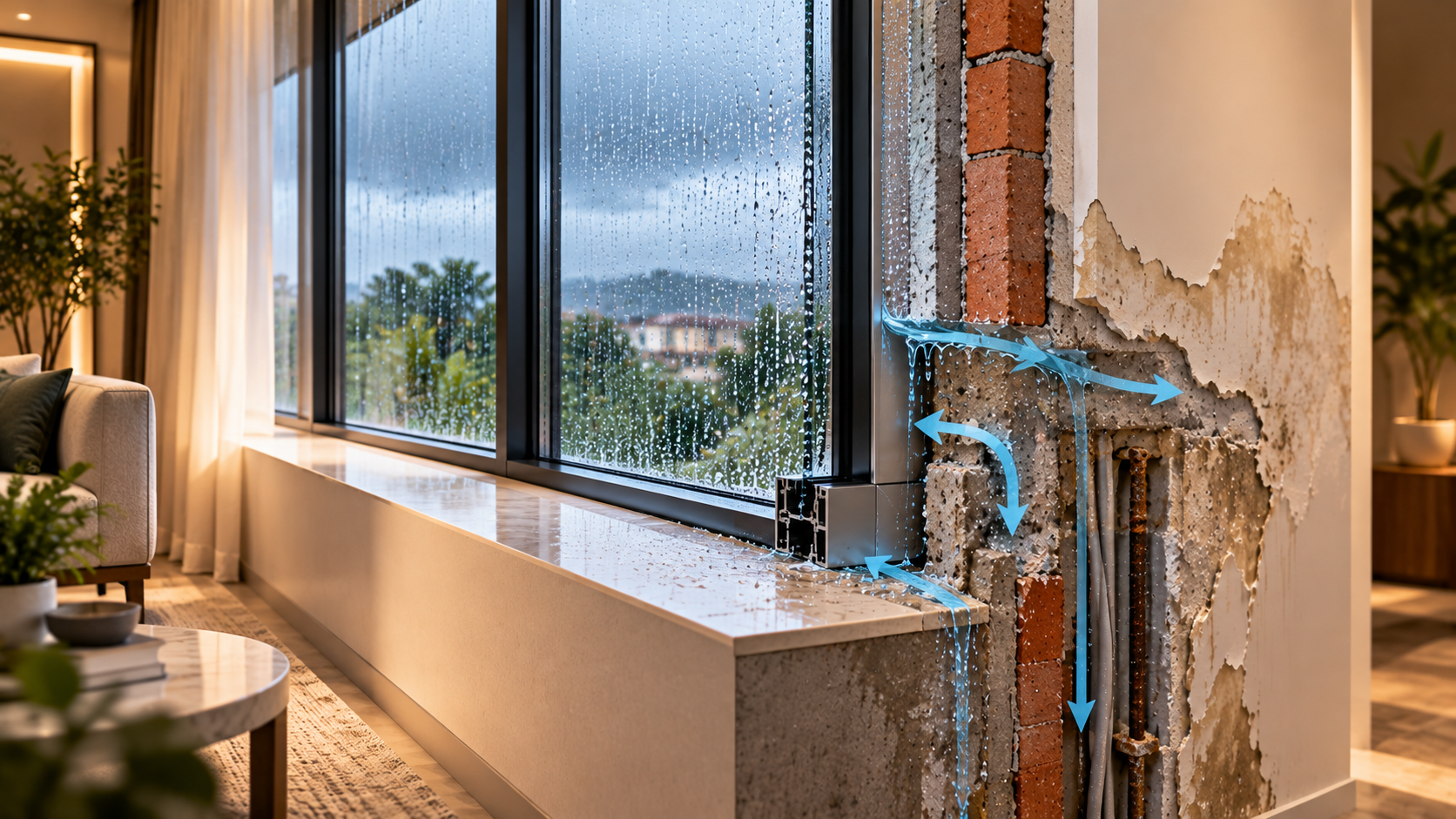
The most visible sign of a leaking window is water staining on the wall or ceiling near the frame, or persistent dampness that appears during or after rainfall.
This usually indicates that the seal between the frame and the wall has broken down, the sealant has cracked, or the drainage system within the track is blocked or missing. In older homes, it is often a sign that the original installation was inadequate.
If left unattended, moisture spreads into plaster, paint, and eventually the structural layer behind the wall. What starts as a cosmetic issue can quickly become an expensive repair.
2. Frames That No Longer Close Properly
A window that does not close flush is no longer sealing effectively against rain or wind.
Wooden frames often swell because of moisture absorption, while steel frames can warp due to corrosion. Even older aluminium systems with low-quality profiles may lose alignment over time.
When a window cannot close completely, wind-driven rain finds an easy path indoors, making leaks inevitable during heavy monsoon showers.
3. Visible Rust or Corrosion
Rust is a sign of structural deterioration, not simply cosmetic wear.
Steel-framed windows, particularly in older homes, are vulnerable to corrosion. As rust spreads, the frame weakens, loses its sealing capability, and may even become loose from the surrounding wall.
Aluminium windows and doors do not rust, making them a durable and reliable replacement for ageing steel systems.
4. Condensation Between Glass Panes
If condensation appears between the panes of a double-glazed window, the sealed glazing unit has failed.
Once moisture enters the cavity, the glass loses much of its thermal and acoustic performance. The fogging cannot be cleaned because the moisture is trapped inside the unit.
If both the glazing and frame are ageing, replacing the complete window system is often a more practical long-term solution.
5. Rattling or Noise During Wind and Rain
A rattling window is a clear indication that it is no longer sealing properly.
Movement within the frame usually means the hardware has worn out or the shutter is no longer sitting firmly in place. During heavy winds, these gaps allow both water and air to enter, while also creating unwanted noise inside the home.
6. Tracks Filling with Water
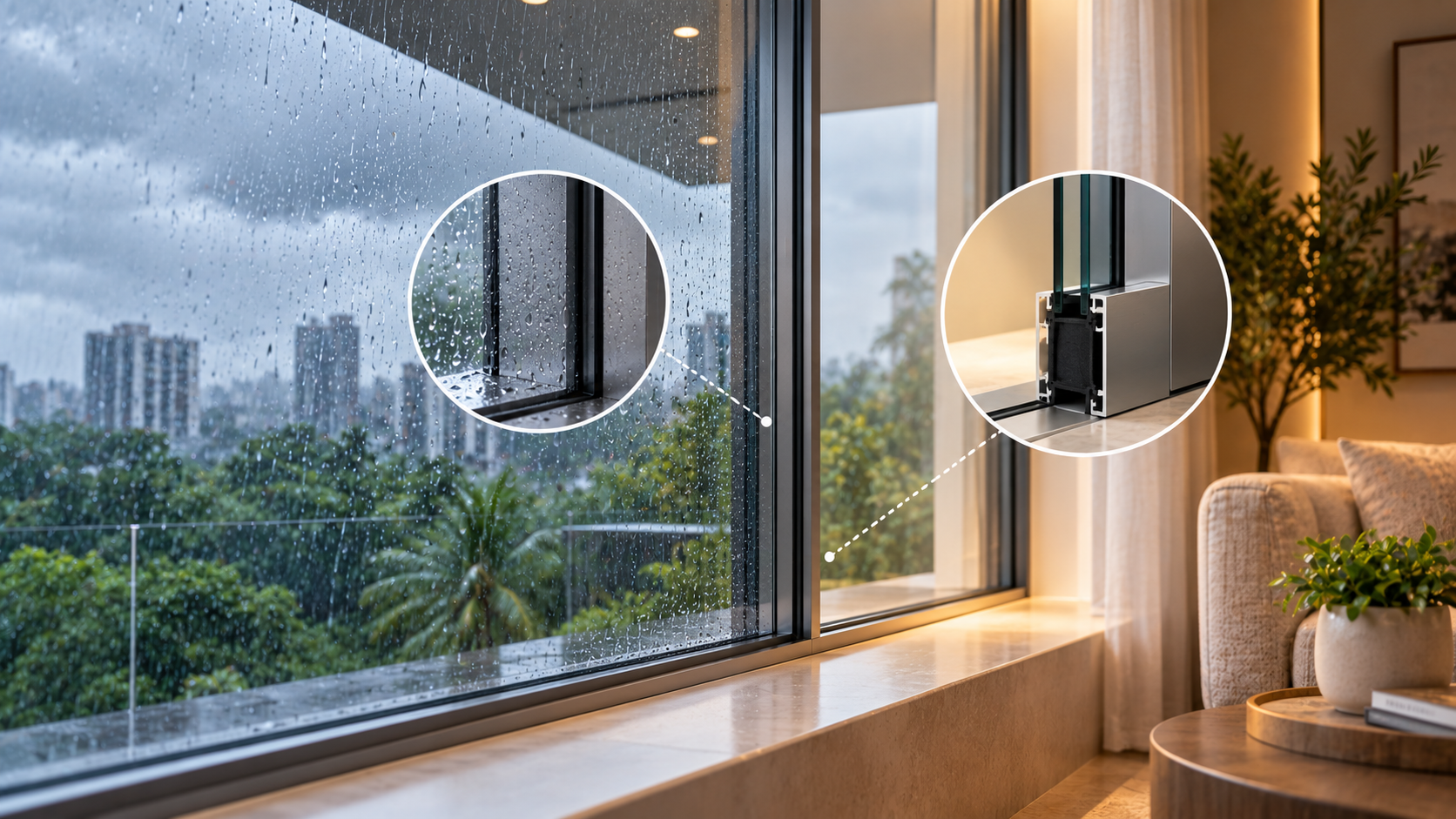
Sliding window tracks are designed to drain water outside through dedicated weep holes.
If water begins collecting in the track instead of draining away, the drainage system may be blocked or poorly designed. Eventually, the water overflows into the home, damaging floors, walls, and nearby furniture.
Cleaning blocked drainage holes helps, but poorly engineered systems may still require replacement to eliminate the issue permanently.
7. Windows More Than Fifteen Years Old
Age alone does not mean a window needs replacement, but it is an important reason to inspect it carefully.
After fifteen years or more, gaskets lose elasticity, hardware begins to wear, and sealants deteriorate due to continuous exposure to sunlight and changing temperatures. A window that has survived many monsoons may suddenly begin failing during the next heavy season.
Modern aluminium windows and doors offer significantly improved sealing, drainage, glazing, and hardware compared to systems installed decades ago.
Final Thought
A leaking window never fixes itself. With every monsoon season, the damage becomes more severe and more expensive to repair.
If you notice any of these warning signs, now is the right time to act. Upgrading to high-performance aluminium windows and doors before the peak of the monsoon helps protect your home from recurring water damage and improves comfort throughout the year.
The cost of delaying an upgrade is often far greater than the investment in getting it done properly.